Europe’s attempt to redraw the rules of its carbon market met resistance almost as soon as talks opened at Dublin Castle, where Ireland’s Presidency of the Council of the European Union began steering negotiations on one of the bloc’s biggest climate-policy rewrites in nearly 20 years.
The European Commission says the overhaul is intended to keep European industry in the race globally without loosening the EU’s legally binding climate commitments.
But Sweden and major environmental groups have already raised the alarm, arguing that parts of the plan could blunt climate action by stretching out emissions cuts and giving a softer landing to companies that have lagged behind in cleaning up their operations.
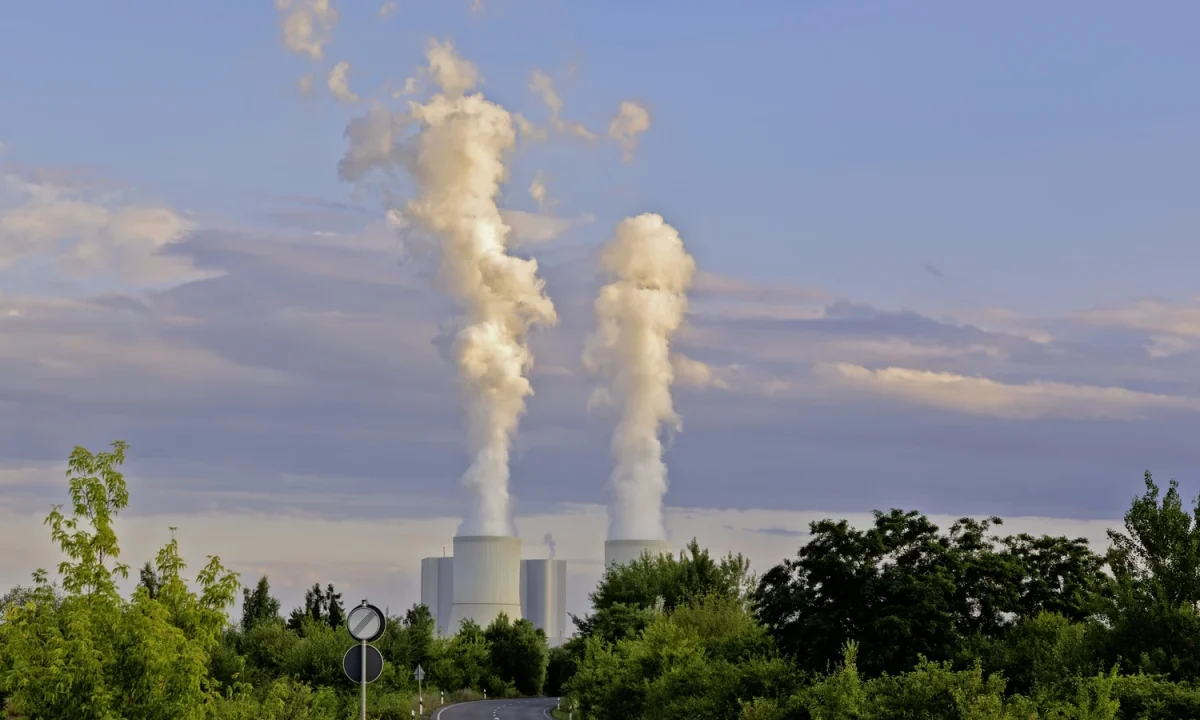
At the heart of the debate is the EU Emissions Trading System (ETS), the bloc’s central carbon market, which applies to power generation, heavy industry, aviation and shipping.
Sweden was one of the first member states to openly challenge parts of the ETS reform plan
The Commission is seeking to update the system as part of a broader drive to speed up electrification across Europe and reduce the continent’s reliance on imported fossil fuels.
Among the measures on the table are a slower reduction in emissions allowances during the 2030s, an extension of free carbon allowances for some industries until 2038, limited access to international carbon credits toward the end of the decade, and a requirement that member states put half of their ETS revenues back into industrial decarbonisation.
Brussels argues that the package would make the clean transition more affordable while keeping the EU on course for its goal of cutting greenhouse gas emissions by 90% by 2040.
European Commissioner for Environment, Water Resilience and a Competitive Circular Economy Jessika Roswall pushed back against claims that the plan marked a retreat from climate ambition.
“I don’t agree with that,” she said.
Commissioner Roswall said Europe did not have to choose between a stronger economy and stronger environmental protection.
“Investing in nature, climate adaptation and competitiveness are not a contradiction. They are two sides of one coin.”
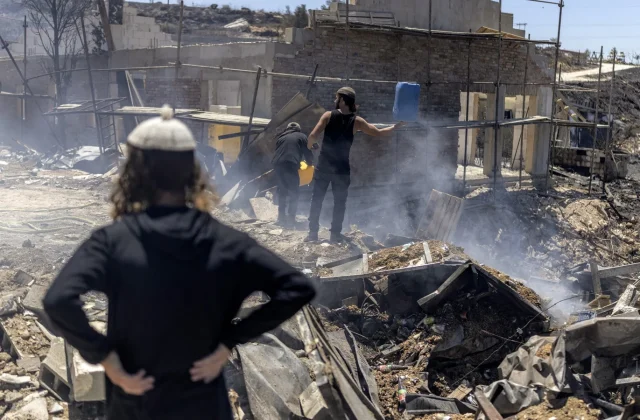
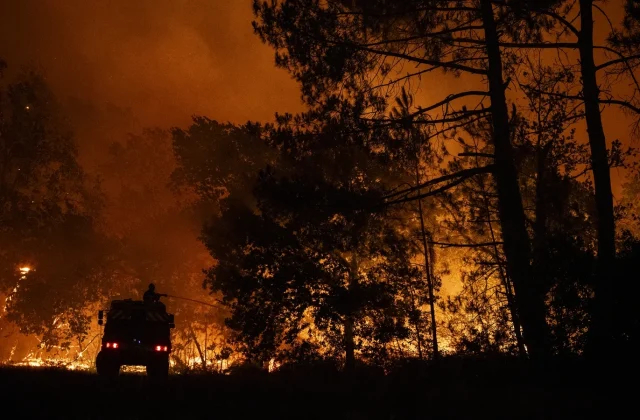
She said the continent must move faster on clean electricity, renewable energy and water resilience as more intense wildfires and droughts take hold across Europe.
Commissioner Jessika Roswall said the proposals were designed to reinforce Europe’s competitiveness
“We need to protect water, secure resilient landscapes and invest in nature because it is about climate adaptation,” she added.
Commissioner Roswall also stood over the Commission’s wider Electrification Action Plan, which seeks to nearly double electricity’s share of Europe’s energy use by 2040 through wider deployment of electric vehicles, heat pumps and renewable power.
The Commission estimates that the plan could cut Europe’s annual fossil fuel import bill by about €260bn by 2040.
Sweden, however, moved quickly to criticise key elements of the ETS package.
State Secretary for Climate and the Environment Daniel Westlén said the Commission’s approach would dilute pressure on industry to cut emissions.
“It’s rewarding those who didn’t do their homework.
“Companies that acted accordingly to what we wanted them to do, that trusted us, will be punished if this proposal goes through,” he said.
Sweden argues that emissions from industry and electricity generation should continue to fall sharply, not least because those sectors are among the most straightforward to decarbonise.
Mr Westlén also rejected the idea of prolonging free emissions allowances for industry and challenged the proposal to let companies draw on international carbon credits later in the 2030s.
“We should stick to the plan and phase them out,” he said of free allowances.
Environmental organisations voiced similar unease about the direction of travel.
Minister Darragh O’Brien said Ireland’s Presidency role was to find common ground (Collins)
Patrick ten Brink, Secretary General of the European Environmental Bureau, said the current push to simplify EU environmental rules risked sliding into deregulation.
“The ambition is not the problem. The implementation is the problem,” he said.
He said Europe should concentrate on making existing climate and environmental laws work better, rather than watering them down.
Mr ten Brink also called on the European Union to ensure its next long-term budget contains no support for fossil fuels, while maintaining investment in renewable energy, electricity grids and environmental programmes.
Ireland, now responsible for chairing talks among the 27 member states, presented itself as a neutral broker in a negotiation already showing clear fault lines.
Minister for Climate, Energy and the Environment Darragh O’Brien said the Presidency would work to build agreement on what is expected to be one of the most difficult climate files of the next six months.
“Our target is to get back to the December Council meeting with proposals with regard to ETS and an agreement.
“I think it’s doable,” he added.
Mr O’Brien said ministers widely accepted that the ETS remains a cornerstone of Europe’s decarbonisation strategy, even if governments differ sharply over how it should be reshaped.
He also pointed to the destructive wildfires burning in parts of Europe as a reminder that the climate crisis is not a distant threat.
“There should be no question or no doubt that we are in a crisis.
“We need to reset how we approach this in terms of the urgency,” Mr O’Brien said.
In addition to ETS reform, ministers discussed Europe’s preparations for this autumn’s United Nations climate, biodiversity and desertification summits, where Ireland will lead EU negotiations.
The talks unfold as Europe tries to hold together competing demands: deep emissions cuts, industrial competitiveness, energy security and the investment needed to transform its economy.
The choices ministers make in the months ahead are likely to define the European Union’s climate policy far into the next decade.
We need your consent to load this rte-player contentWe use rte-player to manage extra content that can set cookies on your device and collect data about your activity. Please review their details and accept them to load the content.Manage Preferences
Robinson urges EU not to weaken climate ambitions
Former President and Elder, Mary Robinson, urged EU Environment Ministers to withstand short-term political and economic pressure to dilute climate ambition, deepen partnerships with Africa before future UN climate talks, and keep their eyes on long-term climate goals.
Speaking at Dublin Castle, Mrs Robinson said Europe was confronting a cluster of immediate crises, but warned that they must not pull policymakers away from the longer journey out of fossil fuels.
She said ministers were dealing at once with climate and biodiversity breakdown, energy security concerns tied to the closure of the Strait of Hormuz, and the rising danger of a developing ‘Super El Niño’ weather pattern.
Instead of treating each shock as a separate emergency, she said Europe needed what she called a “long view management” approach.
That, she said, meant staying committed to green industrialisation, nature restoration and a reduced dependence on fossil fuels while also responding to near-term pressures.
“It is really important to have a green industrialisation, to get out of fossil fuels, to renew nature and to be aware of the link between climate and nature at all times while coping with short-term crises,” she said.
Mrs Robinson also said the European Union should look beyond this year’s UN climate summit and begin building a durable partnership with African countries ahead of COP32, which is due to take place in Ethiopia next year.
She said Europe should treat Africa as an equal partner in tackling climate change, noting that the continent is home to 33 of the world’s 54 least developed countries but receives only around 14% of global climate finance and less than three per cent of private investment.
European governments and investors, she said, could help correct that imbalance.
She also raised concerns about the proposed changes to the EU Emissions Trading System (ETS), saying many European business leaders who had already invested heavily in lowering emissions feared they could lose out if climate rules were weakened.
Mrs Robinson said hope would be indispensable in facing the scale of the climate challenge.
Invoking the late Archbishop Desmond Tutu, she urged leaders to remain “prisoners of hope” as they work through the difficult years ahead.