Abdirahman Roble UlayareTuesday June 16, 2026
After more than a quarter century of political turbulence, Somalia remains locked in a struggle to build a governance system that is stable, inclusive and effective. Successive arrangements have often been treated by many citizens as stopgaps, not as lasting answers to the demands of statehood.
- Advertisement -
At the center of the debate are two of the country’s most contested political arrangements: the 4.5 power-sharing formula and the federal system. Both continue to stir arguments over representation, accountability and the broader question of national unity.
With Somalia heading into another decisive political transition, the stakes are high and the questions are familiar but urgent: where is the country going, and what kind of political order should shape its future?
The Legacy of the 4.5 System
The 4.5 power-sharing model was designed to allocate political representation among Somalia’s major clans and minority communities. Advocates once saw it as a practical route to stability and inclusion. Over time, however, critics say it has done the opposite, hardening clan politics and weakening the case for merit-based governance.
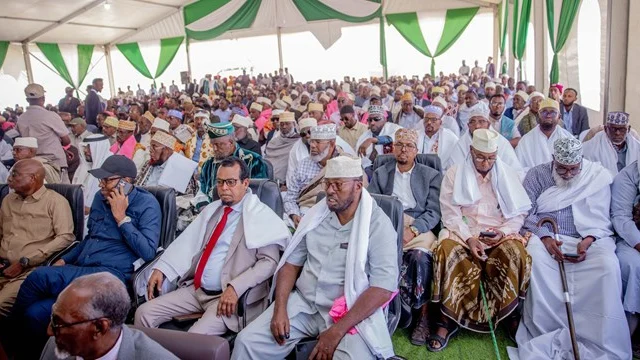
Across communities, many Somalis argue that the formula has produced uneven representation and failed to open the door to meaningful political participation. Larger clans have repeatedly voiced grievances over seat allocation in parliament, while minority groups say the arrangement has locked their marginalization into the system itself.
That has helped create a political culture in which clan loyalty often carries more weight than competence, qualifications or national interest. Critics say the model has also fed patronage, weakened accountability and narrowed the space for capable individuals to serve in public office.
Challenges Facing Governance
Observers point to a deeper problem: Somalia’s institutions remain weak and unevenly developed. The country continues to struggle to build public bodies that can deliver services, uphold the rule of law and provide transparent administration.
In practice, public appointments are often seen as shaped more by political ties than by merit. That perception has eroded confidence in state institutions and fueled recurring friction between federal and regional authorities.
The relationship between the Federal Government and some Federal Member States has frequently been marked by disputes, competing agendas and limited coordination. Those tensions have made it harder to carry out national policies and advance broader state-building efforts.
A New Debate on Somalia’s Future
As the current political cycle draws to a close, Somalia is once again debating the shape of its electoral future. Three broad viewpoints now dominate the discussion.
1. The Government’s Position
The current administration presents its electoral plan as a step toward one-person, one-vote democracy. But critics argue that the proposal does not break meaningfully with the political logic of the 4.5 system. In their view, it simply dresses old arrangements in new language, largely through political parties whose internal rules for choosing candidates remain unclear and poorly defined.
Those critics warn that the approach may preserve the inequalities and complaints long associated with the 4.5 formula, which many Somali communities regard as fundamentally unfair. They say continued exclusion or underrepresentation of certain groups could intensify political tensions and create conditions that may one day spill into unrest or conflict.
The government has already taken several steps, including constitutional amendments, political party registration, the creation of electoral institutions and local elections in selected areas. Supporters say these measures mark important progress toward democratization and toward delivering on long-promised direct elections.
Even so, doubts persist about the transparency, inclusiveness and credibility of the proposed framework.
Questions remain over how parties will select candidates, how representation will be allocated and whether the legal, institutional and security environment is strong enough to support elections that are truly free and fair. Without broad consensus and clear safeguards, critics say the process could deepen existing divisions rather than heal them, prolonging Somalia’s political difficulties for years.
2. The Opposition’s Perspective
Opposition forces themselves remain split over the way forward. Some want to preserve elements of earlier arrangements, including the indirect selection systems used in past elections. Others back direct voting but have not yet agreed on a unified blueprint for how such a system should function.
That lack of a common platform has left the public with limited clarity about what an alternative political model might look like. While many opposition figures reject the administration’s current plan, they have not settled on a replacement.
At the same time, a growing number of politically active citizens, academics and civil society actors are calling for a system grounded in democratic competition, political parties and the individual vote.
Supporters of this vision argue that elections should revolve around citizens, not clans. They want voters to choose parties and candidates based on policy, competence and leadership, rather than on lineage or regional identity.
This approach also depends, they say, on national identification systems, voter registration, independent election bodies and a strong legal framework capable of commanding public trust.
The Importance of Strong Institutions
Whatever electoral path Somalia chooses, many analysts agree that democracy cannot take root without robust institutions. Among the priorities they identify are:
• Establishing an independent constitutional court.• Strengthening the judiciary and rule of law.• Creating transparent electoral management bodies.• Expanding voter registration and national identification programs.• Ensuring accountability and oversight mechanisms.• Promoting merit-based public administration.
Without those building blocks, electoral reform alone is unlikely to deliver lasting political change.
Conclusion
Somalia is at a historic crossroads. The debate is no longer just about who holds power, but about how power should be organized in the years and decades ahead. The task now is to move beyond temporary political fixes and toward a model that can balance representation, accountability, stability and democratic participation.
Whether through direct elections, stronger political parties or deeper institutional reform, many Somalis still share the same hope: a state grounded in justice, competence and the will of its people.
The choices made in the coming years will help determine whether Somalia can finally leave behind the political struggles of the past and build a more unified, democratic and prosperous future.