The Ebola crisis in the Democratic Republic of Congo is intensifying, with fatalities climbing above 400 as the virus extends its reach, challenging fragile healthcare systems and raising alarms of a potential regional health crisis.
According to government figures released on Thursday, a total of 1,460 confirmed cases and 447 deaths have been reported nationwide after 54 new infections emerged on Wednesday in the eastern provinces of Ituri and North Kivu. These numbers reflect a sharp increase from earlier data, which noted 1,406 cases and 438 deaths, underscoring the rapidly progressing outbreak.
Since the outbreak was declared on May 15, the Bundibugyo strain of Ebola has spread across numerous health zones, with Ituri province as the outbreak’s focal point. Over 83% of the fatalities have occurred there, but the virus has also moved into neighboring North Kivu and South Kivu.
Health authorities have confirmed that Lolwa is the most recent health zone affected in Ituri, while the virus has also reached Kisangani, a city of 1.5 million people, located nearly 600 kilometers from the epicenter.
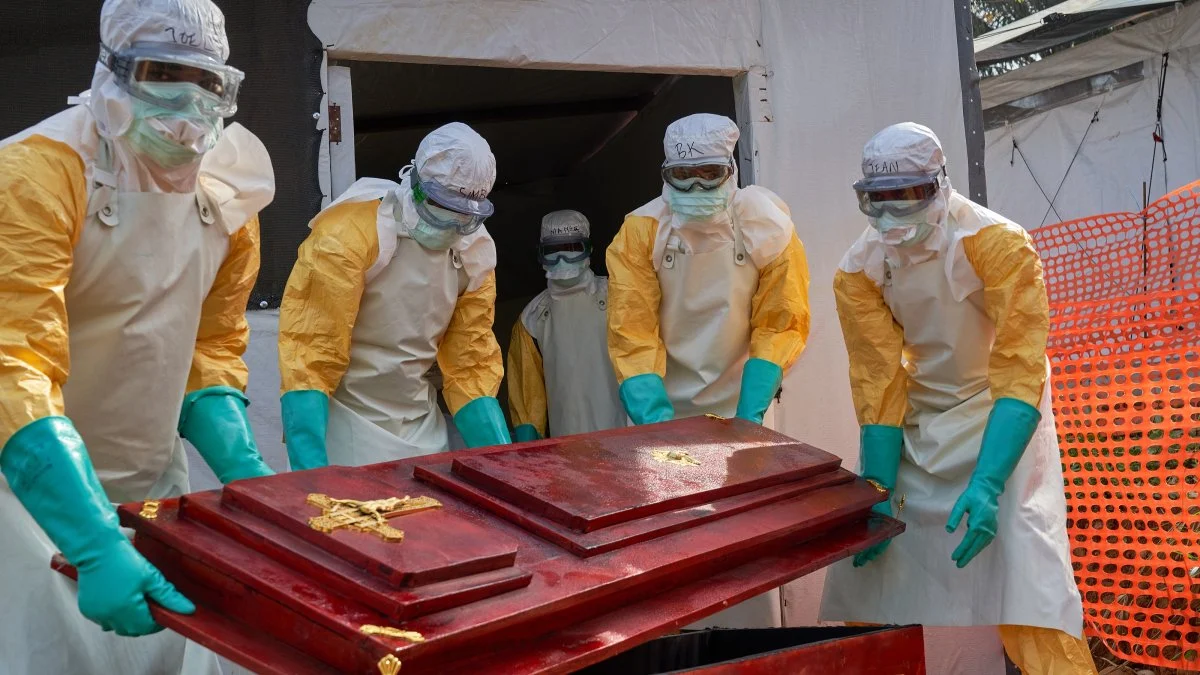
In Kisangani, the first confirmed case involved a 24-year-old pregnant woman who tested positive for Ebola after being clandestinely transported by motorcycle from Nia-Nia in Ituri. Specialists caution that moving infected bodies poses significant risks, as Ebola remains highly contagious post-mortem, with traditional burial customs often exacerbating spread.
The outbreak’s case fatality rate is slightly over 31%. However, the World Health Organization warns that the real death toll is likely higher, as many suspected Ebola-related deaths incurred before the outbreak’s official declaration are still being investigated.
To date, 192 patients have recovered, but over 600 remain under hospital care or isolated as medical teams trace thousands of contacts.
The virus’s reach has extended to Uganda, where 20 confirmed cases, including two deaths, have been reported. The Africa Centres for Disease Control and Prevention indicates that donors and international partners have committed $910 million in response support for both affected nations.
Congolese President Felix Tshisekedi unveiled a $319 million national response strategy this week, aimed at bolstering surveillance, treatment, and containment measures.
“Epidemics know no borders,” Tshisekedi stated at a joint press conference in Kinshasa with South African President Cyril Ramaphosa.
Emphasizing collaboration over isolation, Ramaphosa urged the international community to resist imposing travel bans on Congo. He also expressed hope that a vaccine targeting the Bundibugyo strain could be developed by year’s end.
Unlike the more prevalent Zaire strain, no approved vaccine or treatment exists for the Bundibugyo variant. However, the World Health Organization has initiated clinical trials to evaluate two promising treatments: the monoclonal antibody MBP134 and the antiviral drug remdesivir, though determining their efficacy may take months.
Beyond the virus, health officials contend with insecurity, armed conflict, displacement, public distrust, and overwhelmed medical resources, complicating efforts to contain the outbreak in eastern Congo.
In the Nia-Nia health zone, violence erupted as residents resisted surrendering an Ebola victim’s body for safe burial. Protesters clashed with police, set an Ebola treatment center ablaze, and allowed seven isolated patients to escape. These patients remain missing, with local officials reporting the deaths of an officer and injuring of two protesters during the chaos. Demonstrators also seized two bodies, escalating transmission risks.
Local health workers report persistent Ebola denial among residents, alongside accusations of profiteering against aid groups, complicating public health efforts.
The outbreak has also extended into Haut-Uele province, where authorities cited one death and another infected person who fled from the Nia-Nia zone. These cases, along with those in Tshopo province, are classified as imported from Ituri, with several contacts now under surveillance.
Health facilities are critically lacking in protective gear, chlorine, medicines, and other supplies essential for patient care and frontline worker safety.
The Democratic Republic of Congo has faced 17 Ebola outbreaks over the past fifty years. Its most severe outbreak, from 2018 to 2020, resulted in nearly 2,300 deaths.