
More than two years into the violence, Gaza has been pushed into what UNICEF describes as a “dire” reality, with families battling not only insecurity but the daily struggle to meet the most basic needs.
Salim Oweis, the organisation’s Communication Officer, has just returned from Gaza after two weeks spent across different parts of the territory.
- Advertisement -
Speaking on RTÉ’s This Week programme, he said he witnessed people suffering from skin rashes and rodent bites, a stark sign of how deeply living conditions have deteriorated.
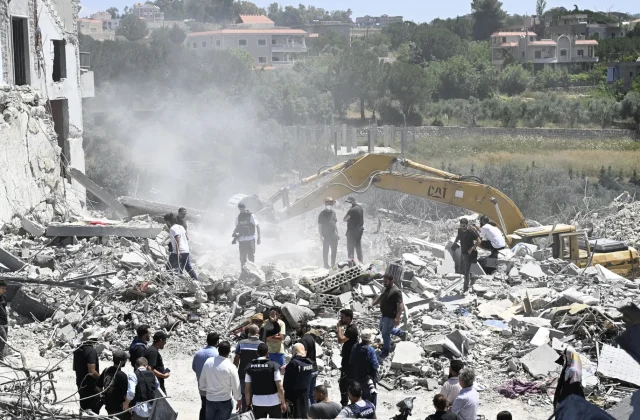
His remarks came as Gaza’s civil defence service and hospitals said Israeli attacks killed at least six people today, the latest bloodshed to strike the territory despite a ceasefire that has been in place for months.
In northern Gaza, an Israeli airstrike on the Jabalia refugee camp killed four people and wounded several others, according to the civil defence agency, a rescue service that operates under Hamas authority.
Mr Oweis said that while UNICEF observed somewhat greater movement in areas where travel is permitted, people in Gaza remain increasingly frustrated by the collapse in services as they continue to struggle through daily life without essentials.
Displaced Palestinians, including children, form crowded queues at a food distribution point in the Nasr neighbourhood, west of Gaza City
He said those essentials include the ability to maintain hygiene, as well as functioning wastewater systems.
The water network, sanitation infrastructure and sewerage systems have all but collapsed or been completely destroyed, he said.
“Adults and children are beyond struggling every day to keep themselves in a state of good hygiene, but also to protect themselves from rodents, bites and such.
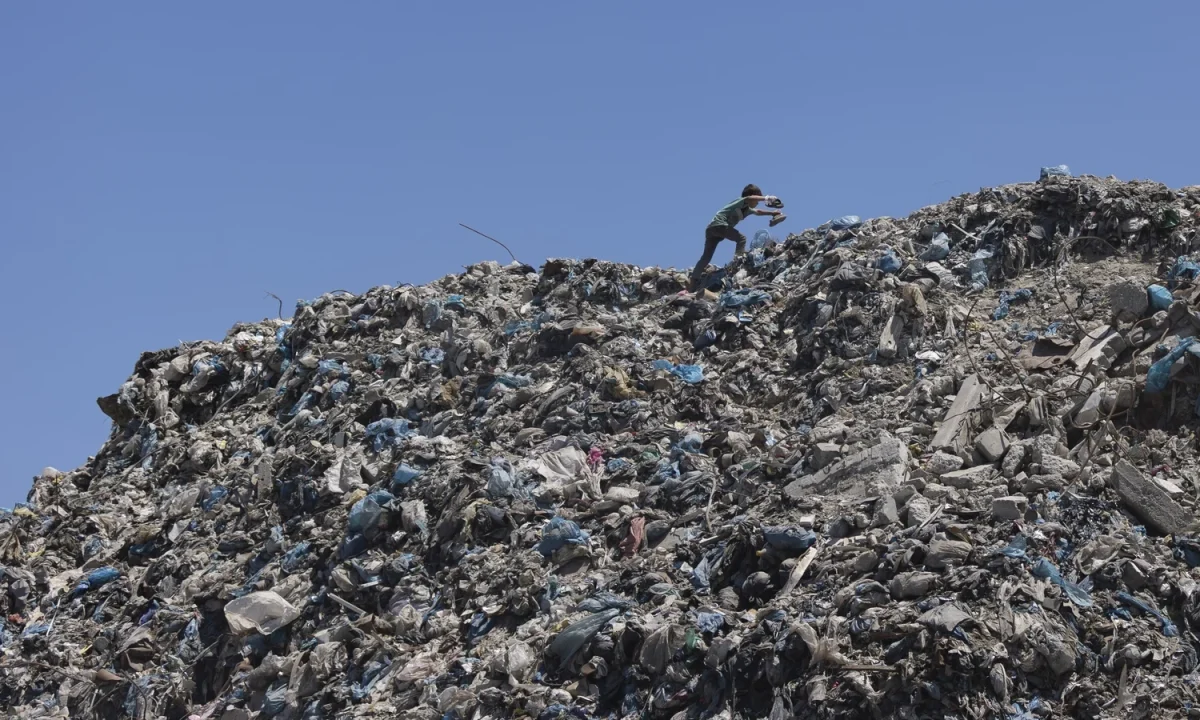
“After two and a half years of violence, there’s mountains of rubble and solid waste spread across residential areas so it’s the perfect environment for rodents to re-produce and take over the city.”
He said rodents were entering tents, camps and buildings alike, as the sewerage system has fallen into severe disrepair because of a lack of maintenance and the ongoing violence.
We need your consent to load this rte-player contentWe use rte-player to manage extra content that can set cookies on your device and collect data about your activity. Please review their details and accept them to load the content.Manage Preferences
Turning to hospitals, he said only a small number remain open, and not one is fully operational, even as humanitarian needs continue to grow.
“Those that are still standing are dealing with not only the injuries of the war still happening, but also with day-to-day diseases, sicknesses and traumas.
“The health system is really collapsing under the pressure.”
He said aid is critical to improving conditions, but supplies are either being blocked from entering or arriving in quantities far below what is needed.
Mr Oweis added that unsafe zones still exist across Gaza, including the yellow line, where people are living but cannot reach services because of safety and security fears, effectively leaving them cut off.
He said that while UNICEF can help secure medical evacuations for children in urgent need of treatment, some do not survive the wait.
At least 986 Palestinians have been killed in Gaza since the ceasefire took effect on 10 October last year, according to Gaza’s health ministry, which operates under Hamas authority and whose figures are considered reliable by the United Nations.
The Israeli army has reported five deaths in its ranks during the same period.
Additional reporting AFP