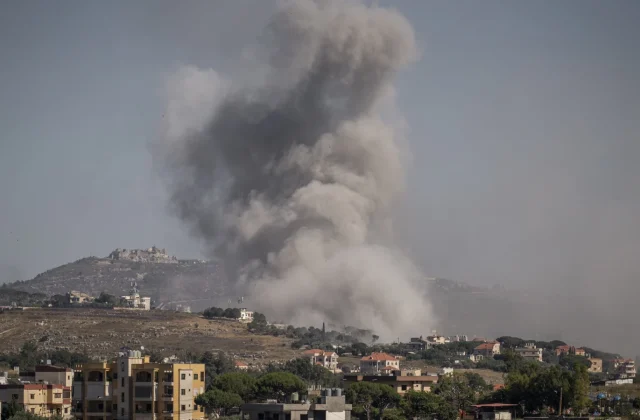

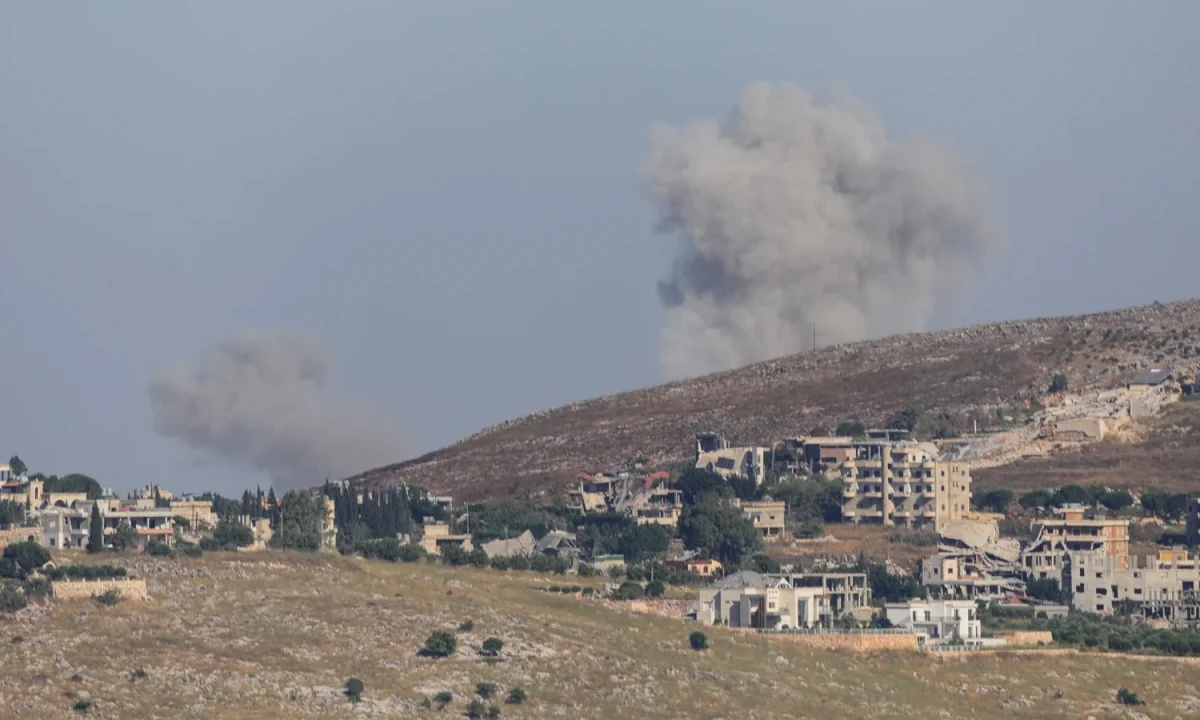
A fragile ceasefire between Israel and Hezbollah appeared to unravel almost as soon as it was announced, as fresh Israeli strikes pounded Lebanon’s southern Nabatieh district and, according to Lebanon’s civil defence agency, killed 16 people.
Emergency crews said they had taken “16 dead and 12 wounded” to hospital, adding in a statement that teams had been working “since the early morning hours” across the Nabatieh district in response to “ongoing attacks targeting the area”.
One Lebanese soldier is also believed to have been killed in the bombardment.
At the same time, Hezbollah MP Hassan Fadlallah said the group retained the right to answer Israeli attacks, with Israel continuing to strike Lebanon despite the new ceasefire announced just a day earlier.
He said that “the resistance has the full right to confront this enemy when it attacks us, as it is the aggressor and the occupier”.
Lebanon’s state-run National News Agency (NNA) said Israeli warplanes struck more than a dozen locations in southern Lebanon after midnight and through this morning, with many of the attacks concentrated in and around Nabatieh.
The agency also reported Israeli artillery shelling on Nabatieh city and nearby areas, where clashes have intensified in recent days.
According to the NNA, three people were killed in airstrikes on the town of Arab Salim, while one person died in Deir Zahrani and another was killed after “an enemy drone launched a strike on a motorbike” at the entrance to the town of Dweir.
Yesterday, a US official told AFP that US and Qatari mediators had secured an immediate truce between Israel and Hezbollah after talks involving Israel and Iran. A Gulf diplomat also confirmed the ceasefire.
Israel’s ambassador to the US said his country would honour the ceasefire if Hezbollah did the same.Previous truce announcements have done little to stop attacks from either side.
Read: Latest Middle East headlines
The ceasefire announcement followed one of the deadliest days in recent months. Lebanon’s health ministry said Israeli airstrikes and shelling in the country’s south and east killed 47 people yesterday, the worst violence since Washington and Tehran this week reached a deal to halt the wider Middle East war.
That agreement was also meant to stop the fighting between Israel and Hezbollah in Lebanon.
Israel’s military said yesterday that four of its soldiers had been killed, and reported carrying out more than 150 strikes on Lebanon that it said killed “dozens of Hezbollah terrorists”.
Also yesterday, Lebanese President Joseph Aoun told US Secretary of State Marco Rubio that talks with Israel could only move forward if a comprehensive ceasefire was put in place.
Under pressure from the United States, Lebanon in April opened direct talks with Israel in Washington aimed at ending the hostilities and separating the Israel-Hezbollah front from the broader regional war.
A fifth round of talks is scheduled to begin on Tuesday, according to the State Department.
US officials, including President Donald Trump, have voiced frustration with Israel’s campaign in Lebanon.
But Israeli Prime Minister Benjamin Netanyahu yesteriday repeated that Israeli troops would remain in south Lebanon “as long as necessary”.
Hezbollah brought Lebanon into the Middle East war in early March, launching rocket fire at Israel in retaliation for the killing of Iran’s supreme leader in US-Israeli strikes.
Israel answered with a sweeping air campaign and a ground invasion.
Prospects of Iran-US talks unclear
Even as the fighting continued, it remained unclear whether any substantive talks would begin soon between the US and Iran to turn this week’s interim 14-point pact into a durable agreement ending thewar that the US and Israel launched on 28 February.
Pakistan’s interior minister, Mohsin Naqvi, was in Tehran for talks with Foreign Minister Abbas Araqchi, Iran’s Foreign Ministry spokesperson said, according to Iran’s ISNA news agency. Pakistan has been mediating in the conflict.
US Vice President JD Vance this week cancelled plans to travel to Switzerland for talks with Iran, which Bern has said it is ready to facilitate, as tensions between Israel and Hezbollah escalated.
The White House did not confirm reports that US President Donald Trump’s envoy Steve Witkoff and Mr Trump’s son-in-law Jared Kushner still planned to meet Iranian officials in Switzerland.
Yesterday, Swiss authorities met Qatari officials, who have also been backing the negotiations, at the mountain resort of Buergenstock near Lucerne.
The Iran war has killed at least 8,000 people, most of them in Iran and Lebanon. It has also driven up energy prices, fuelling inflation around the world.
The interim agreement envisions sanctions relief for Iran, the release of assets worth tens of billions of dollars and immediate U.S. waivers allowing its oil exports.
It also includes a $300bn reconstruction fund forIran and other financial incentives.
Mr Trump again defended the deal after facing criticism in Washington, including from Republican allies in Congress who argue he gave away too much to end a war that is unpopular with most Americans ahead of the midterm elections in November.
“The War has diminished Iran!” Mr Trump wrote on social media yesterday, adding, “We didn’t meet out of desperation, Iran did. They are FINISHED! We’ll play out the 60 days. They get no money, not 10 cents!”
Gaza health officials say Israeli strikes kill five
Elsewhere in the Middle East, Gaza health officials said Israeli strikes today killed five people, including four from the same family, in the latest bloodshed to hit the Palestinian territory despite a ceasefire.
Israel and Hamas continue to trade near-daily allegations of truce violations, and the Gaza Strip remains trapped in violence as efforts to permanently end the war have stalled.
An overnight Israeli airstrike on an apartment building in the Sabra neighbourhood of Gaza City killed four members of the al-Safadi family — the husband, wife and their two daughters — according to the civil defence agency, a rescue service operating under Hamas authority.
The agency said 12 other people were wounded in the strike.
Gaza City’s Al-Shifa hospital said it had received the bodies of four members of the al-Safadi family, including two children.
The hospital added that it had also received another body after a separate Israeli drone strike near an intersection in northern Gaza City.
When AFP asked about the two incidents, the Israeli military did not provide an immediate response.
Since the ceasefire took effect on October 10 last year, at least 1,012 Palestinians have been killed in Gaza, according to the territory’s health ministry, which operates under Hamas authority and whose figures the United Nations considers reliable.
The Israeli army has reported five deaths among its own forces over the same period.
Restrictions on media organisations and limited access inside Gaza mean AFP cannot independently verify casualty tolls or report freely on the violence there.