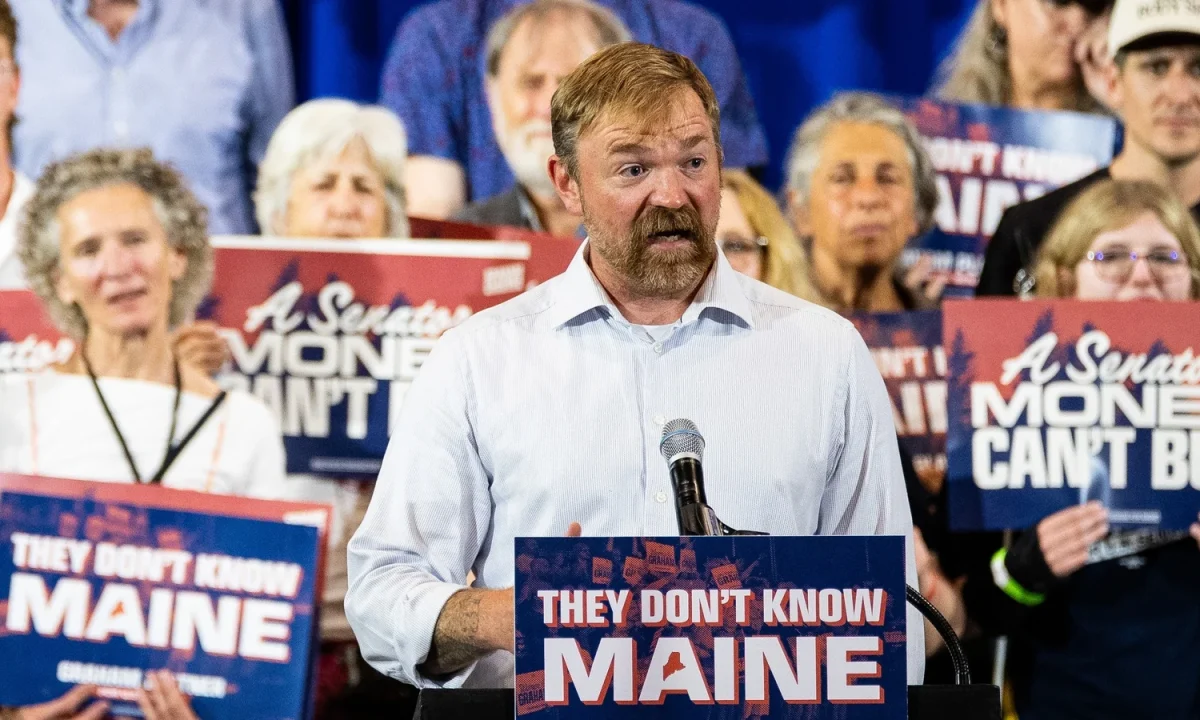
What began as an unlikely political rise for a Maine oyster farmer — a Marine Corps veteran whose worldview was shaped by Irish history lessons in high school — has now turned into a sudden collapse that has jolted Democratic hopes of flipping the US Senate this November.
After months of a high-risk, headline-chasing campaign shadowed by controversies involving his treatment of women, past online trash talk and a tattoo resembling a Nazi symbol, Graham Platner’s bid imploded this week when a serious sexual assault allegation surfaced, leaving the party scrambling and the race for a pivotal seat in turmoil.
Liberal activists had recruited Mr Platner to run a populist campaign, convinced his working-class style made him a rare communicator who could defeat Republican Senator Susan Collins as she seeks a sixth term.
That bet drew some of the most prominent endorsements in progressive politics. Mr Platner, who has spoken openly about post-traumatic stress disorder linked to his military service, won backing from figures including Senator Bernie Sanders, Representative Alexandria Ocasio-Cortez and New York Mayor Zohran Mamdani.
This week, a serious sexual assault allegation torpedoed his bid for office and that support.
Jenny Racicot told Politico and CNN that Mr Platner entered her home without permission in 2021 when he was drunk and forced himself on her, ignoring her demands for him to stop.
In an 11-minute social media video, Mr Platner vehemently denied the rape allegations, calling them “false”.
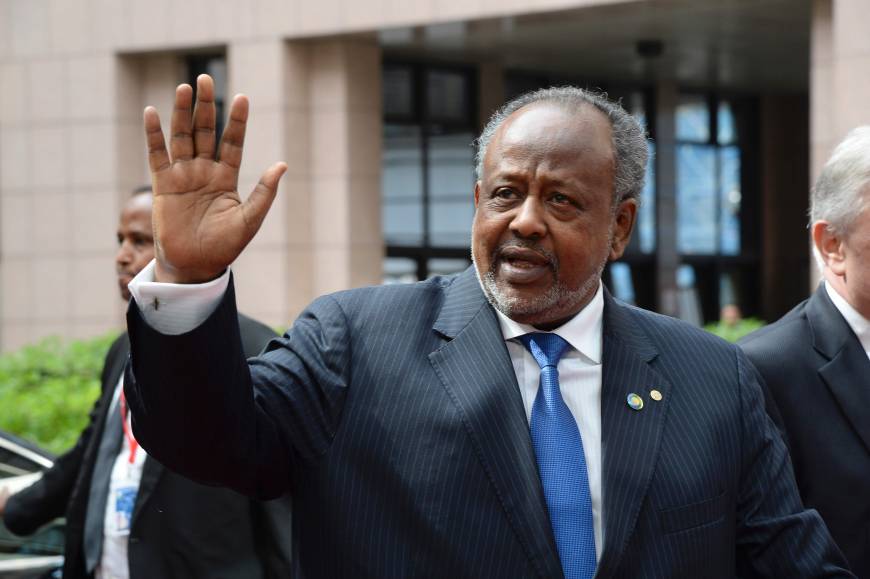
Senator Bernie Sanders endorsed Graham Platner
Instead, he argued that the pressure campaign around him had made it impossible to continue.
He said the “political establishment” had effectively shut the operation down, framing his decision as a protest rather than a retreat.
“This is incredibly difficult, because I know that some will think it’s an admission of guilt, and it most certainly is not.
“We’re not doing it because of the allegations, we’re doing it because of the structures that are being taken away from us by those in power,” he added.
The sudden rupture has forced Democrats to confront questions about how thoroughly they vetted a candidate who had been held up as a centerpiece of a Senate strategy — and whether warning signs were ignored in the rush to capture what many viewed as a crucial, winnable seat.
“Clearly the people who promoted Platner should have done a far better job vetting him – and being honest about his vulnerabilities both in private and in public,” said Simon Rosenberg, a long-time centre-left strategist who now writes the Hopium Chronicles newsletter on Substack.
“Parties favour candidates who have been vetted and who have won before, and neither of those things are true of him. His flame-out is endangering our shot at winning the Senate,” he said.
Democrats must net four Senate seats to gain control of the 100-member chamber in November, and party leaders had viewed Maine as an essential target alongside Alaska, Ohio and North Carolina.
Mr Platner won last month’s Democratic primary with 72% of the vote, and election analysts say the opening for Democrats has not vanished — but the path forward now looks far more complicated.
Jessica Taylor, Senate Editor for the Cook Political Report, told RTÉ News the Democrats are better off without him and that Democrats have other options, but it’s going to be a hard fight.
“Maine is one of the easiest paths forward because it’s the only state held by a Republican that Kamala Harris carried. Susan Collins has managed to outrun the political lean of the state before. She’s a very formidable candidate. She has the ability to do that again,” Ms Taylor said.
“But I think there are other states: Ohio, Alaska and Iowa. If they don’t win Maine, they have to win three states that Trump carried by double digits and that’s not easy to do either,” she said.
On the Republican side, strategists are split on what Mr Platner’s collapse means — whether it removes a uniquely unpredictable opponent or simply clears the way for a cleaner Democratic challenger.
“I think that Platner soared initially because he is a unique and talented personality,” said Lance Dutson, a GOP strategist who formerly served as communications director for Collins’s 2014 campaign, in comments to The Hill.
“The odds of them being able to pull that off again… there’s nobody with just even the slightest of dynamism to them,” he added.
Republican pollster and strategist with On Message Inc, Sam Kay said that Susan Collins should still be worried.
“With a 53-seat majority, Democrats need to net four seats to flip the chamber, and there aren’t enough battleground states for them to accomplish that.
“Maine is a good pickup opportunity for [Democrats]. With Platner’s now public record, it’d probably be better for Collins’ chances if he stayed in the race. A generic Democrat without his history will likely perform better despite current polling,” he said.
Mr Platner’s withdrawal has pushed an often-overlooked state — with a population roughly the size of Dublin — into a new level of international attention, while launching Democrats into a rushed contest to define not only a nominee but a direction.
Roughly 600 delegates will choose the party’s next Senate candidate, and the scramble is quickly becoming a wide-open fight.
Even before this week, Mr Platner’s rapid ascent had exposed a widening rift inside the party, with progressives rallying behind him while more centrist Democrats questioned both his electability and whether his conduct matched party values.
Former Senator Troy Jackson is a logger from northern Maine
Many of Mr Platner’s early defenders had endured a steady stream of damaging revelations, convinced that his outsider appeal offered the best shot at unseating a vulnerable — though repeatedly underestimated — incumbent. Sceptics within the party’s establishment, meanwhile, warned that the baggage would eventually overwhelm the message.
“Obviously, there’s a lot in that behaviour that’s really challenging. It’s hard to stomach,” Rep Ocasio-Cortez told CNN at the beginning of June.
“But at the end of the day, I think it’s a choice… If the choice on the ballot is between that and a senator who’s voted to take healthcare away from millions of Americans, that’s the situation that we have to weigh,” she said.
Now, with Mr Platner out, Democrats expect the contest to replace him to deepen the same internal fault lines — and to test whether the party can unite quickly enough to stay competitive.
His support had rested on a familiar combination: progressive policy promises, a working-class “man of the people” brand and a narrative of sudden discovery — a candidate “plucked from obscurity” and turned into a movement.
“It is important that someone carry forward the movement that has been built here of everyday working-class people who are fed up with a system in Washington that is so broken,” Maine House Speaker Ryan Fecteau said in an interview.
“There are a number of people in Maine politics who share the same views as Graham Platner, who have the same message as Graham Platner, who can carry this work forward,” he said.
Several possible successors are already being discussed, including figures who competed in the recent gubernatorial primary.
Two prominent contenders have emerged as clear symbols of the party’s internal divide — one rooted in the same insurgent energy that powered Mr Platner, the other associated with steadier, institutional reassurance.
Troy Jackson, who was backed by Mr Platner and Senator Bernie Sanders during his recent Governor’s race, has already won the endorsement of Californian Representative Ro Khanna.
“There is a powerful movement of working-class people in the state of Maine, and millions more across America who are ready to send a progressive fighter to the Senate,” Mr Jackson, a logger from northern Maine, said.
Former Director of Maine’s Centre for Disease Control and Prevention Nirav Shah is widely viewed as a more measured, moderate option — though the former public health official has described himself as a progressive.
“I’m proud to have dedicated my career to public service, and to have delivered for Mainers in our darkest times. Now, in this unprecedented moment, I’m ready to unite our party and fight for you once again,” Mr Shah said in a post.
The choice now confronting Democrats in Maine mirrors a larger question facing the party nationally: shift toward the centre, or double down on the progressive message that has recently energised core voters.
“We ask for your patience as this work continues,” Devon Murphy-Anderson, the state party’s executive director, wrote in a message to committee members on Tuesday, according to the New York Times.
“Whatever process is ultimately adopted must reflect our Democratic values. It should be open, inclusive, transparent, and fair,” he said.
For Democrats, the implosion has become yet another search for a reset — and another reminder of how quickly a marquee campaign can unravel.
In one of the nation’s most watched Senate contests, the decision made in the coming weeks will shape more than a ballot line.
It will serve as a signal of what Democrats believe they must become next — and how they intend to brace for what is expected to be a gruelling 2028 race.