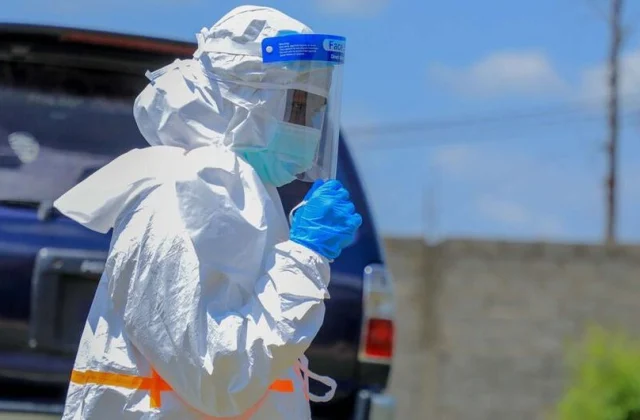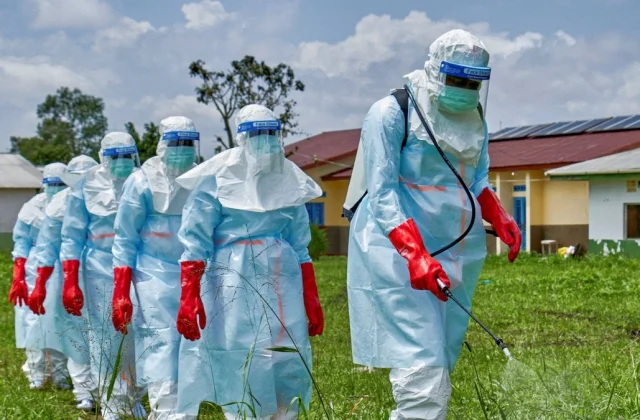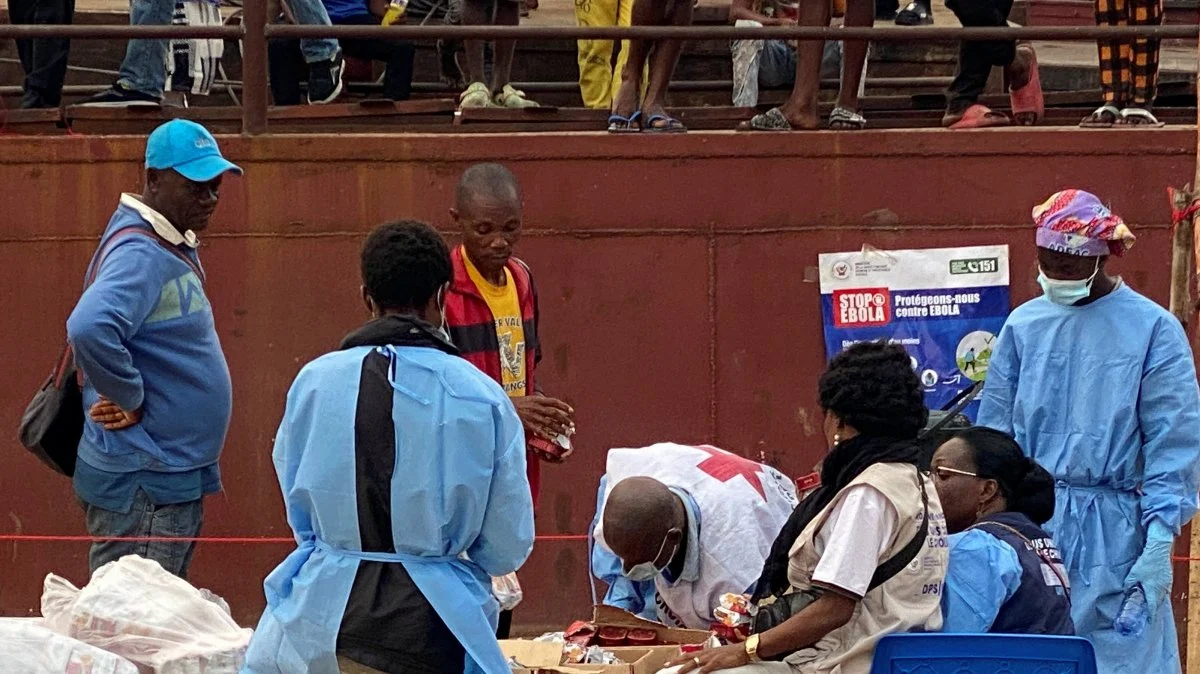
The Ebola crisis in the Democratic Republic of Congo has crossed a grim threshold, with confirmed infections exceeding 4,000 for the first time and deepening alarm over the country’s most severe outbreak of the disease to date.
Figures released by the government Thursday put the toll at 4,053 confirmed cases and 1,850 deaths since authorities formally announced the outbreak on May 15.
Health officials said roughly 793 people have recovered. Nearly 700 others were still in hospitals or isolation units as emergency teams worked to curb further transmission.
The epidemic is now the second-largest Ebola outbreak ever recorded worldwide and the biggest in Congo, where the virus was first discovered in 1976. Health specialists have also characterized it as the fastest-spreading Ebola outbreak documented.
The only outbreak to surpass it was the catastrophic 2014-16 epidemic in West Africa, which sickened more than 28,000 people in Guinea, Liberia and Sierra Leone.
Researchers say the virus was likely circulating well before it appeared on the official radar.
A study published last month in the journal Science found that transmission probably started in January, or possibly earlier, near Mongbwalu, a gold-mining town in Ituri province. The research pointed to more than 500 suspected cases before the outbreak was declared in mid-May.
That lag in detection gave Ebola crucial time to move through communities before broad containment operations could be put in place.
The outbreak involves the Bundibugyo strain of Ebola, a rare species for which no licensed vaccine or approved treatment currently exists.
Vaccines and treatments designed for the more common Zaire strain are being used in some locations through expanded access programs or clinical studies. At the same time, health officials are urgently assessing experimental vaccines and therapies aimed specifically at Bundibugyo.
The virus has reached five provinces: Ituri, North Kivu, South Kivu, Haut-Uele and Tshopo. Ituri remains the center of the crisis and accounts for the vast majority of infections. More than 50 health zones have been affected across the country.
Public health experts say several forces have driven the outbreak, including late surveillance, armed conflict in eastern Congo, mass displacement, heavy travel connected to artisanal gold mining and deep-seated mistrust of health authorities.
Those challenges have made it harder to trace contacts, isolate patients and carry out safe burials, giving the virus more room to spread than response teams can quickly close off.
Many of those infected have died before arriving at treatment centers, heightening the danger of transmission within communities.
Children have suffered heavily as well, with aid groups reporting high death rates among younger patients.
Uganda, which borders Congo, identified a small number of linked infections but stopped local transmission through swift containment measures and later declared its outbreak over. Even so, regional health bodies continue to warn that nearby countries face a high risk because people frequently move across borders.
International organizations, including the World Health Organization, Africa CDC and Medecins Sans Frontieres, are assisting Congo’s response. Officials, however, say serious barriers remain. Insecurity, attacks on health centers, shortages of isolation beds and medical supplies, funding shortfalls and gaps in contact tracing continue to slow efforts to contain the outbreak.
Specialists also warn that the official numbers may not reflect the full extent of the crisis. Weak laboratory access in remote areas, underreporting and deaths occurring outside the formal health system mean many cases are likely still going uncounted.
The Axadle Times Newsletter
Stay up to date on developments in Turkey,
the region and around the world.
SIGN ME UP
You can unsubscribe at any time. By signing up you are agreeing to our Terms of Use and Privacy Policy.
This site is protected by reCAPTCHA and the Google Privacy Policy and Terms of Service apply.