
As the dust settles over Venezuela’s shattered coastline, the death toll from the country’s twin earthquakes has surged to nearly 3,000—an agonizing marker of a disaster that has already begun to slip from rescue to recovery.
Official figures put fatalities at 2,954 today, up by more than 300 since Friday, after the 24 June quakes tore through communities, forcing thousands to sleep in streets and makeshift shelter camps.
Tens of thousands more are still missing.
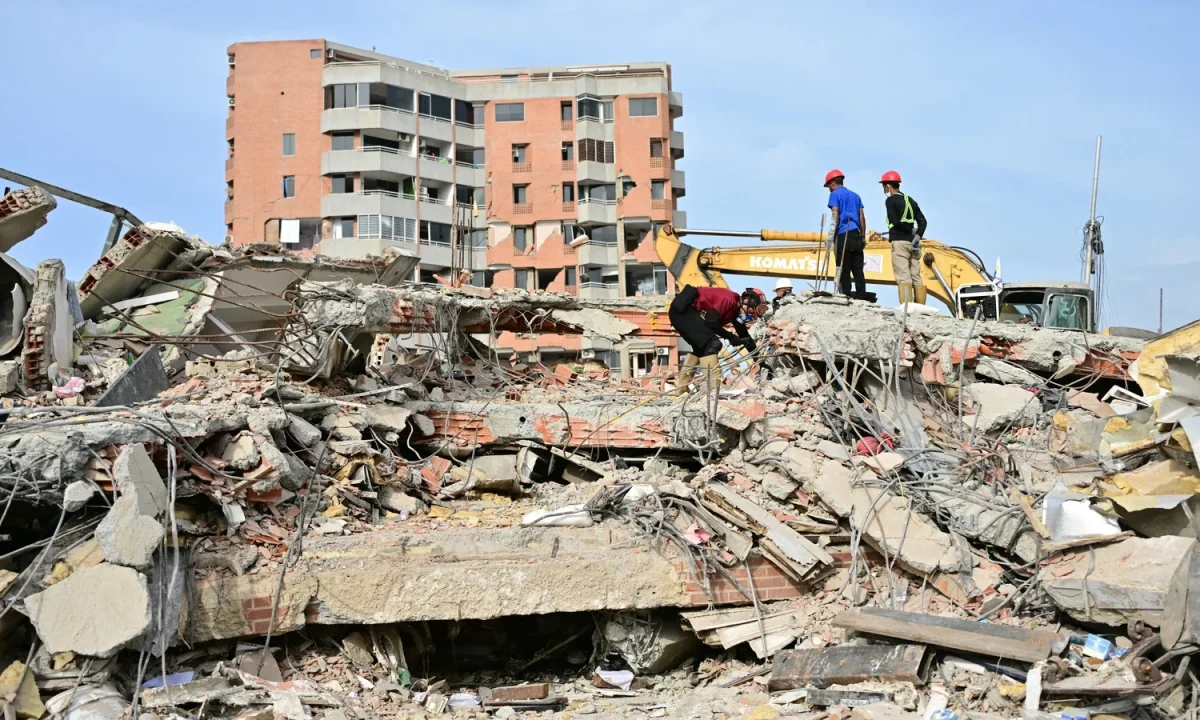
The catastrophe—among Latin America’s worst earthquake disasters in recent memory—hit with particular force in the coastal La Guaira area north of the capital, Caracas, where entire residential complexes were crushed into piles of concrete and rebar.
In earthquakes, the most hopeful rescues typically come within the first 72 hours, a critical window that has now closed, even as a handful of survivors have still been pulled out alive this week.
Still, signs are mounting that international search efforts are drawing to an end. Interim President Delcy Rodriquez marked the moment with a ceremony awarding medals to overseas responders—some presented to their rescue dogs as well.
Venezuela is experiencing “a profound grief gripping our people, where families still hold out hope of finding loved ones alive, people who have lost everything,” Mr Rodriquez said.
On Saturday, members of international disaster teams—including some US squads as well as South American contingents—said they were beginning to wrap up rescue operations.
The Los Angeles County fire department rescue team is closing up its operations after latest searches showed no signs of life, and teams from Florida and Virginia were packing up to leave this weekend, their teams said.
Across the country, many Venezuelans have voiced fury at what they describe as a sluggish government response, saying relatives spent the first hours clawing through debris themselves in desperate attempts to reach those trapped before outside help arrived.
Rodriguez has defended her government’s response, saying thousands of troops and officials had been dispatched.
In La Guaira on Saturday, the shift from searching to clearing became visible on the ground: heavy machinery moved in to begin knocking down collapsed structures, even as in other places families continued the painful work of retrieving bodies for funerals.
“We’re still working, still searching for bodies. We’re still going. It hasn’t been easy,” said Venezuelan volunteer Francisco Sasquia helping dig out a collapsed residence.
“We found two bodies that have already been released to their families.”
The displacement is vast. More than 16,000 Venezuelans have lost their residences in the quakes, leaving families scattered between shelters, sidewalks and any patch of open space they can claim.
Hospitals are stretched, with experts warning of the risk of disease outbreaks.
For Víctor Colivert, the crisis has narrowed to one unbearable duty: staying beside his nephew’s body, recovered from the wreckage of a building and sealed now in a black body bag.
In the confusion, he fears it could be taken—or lost. His family stopped forensic workers from removing the body.
“If I have to go to China, to wherever, but I’m not leaving him alone,” he said. “I’m going with him.”