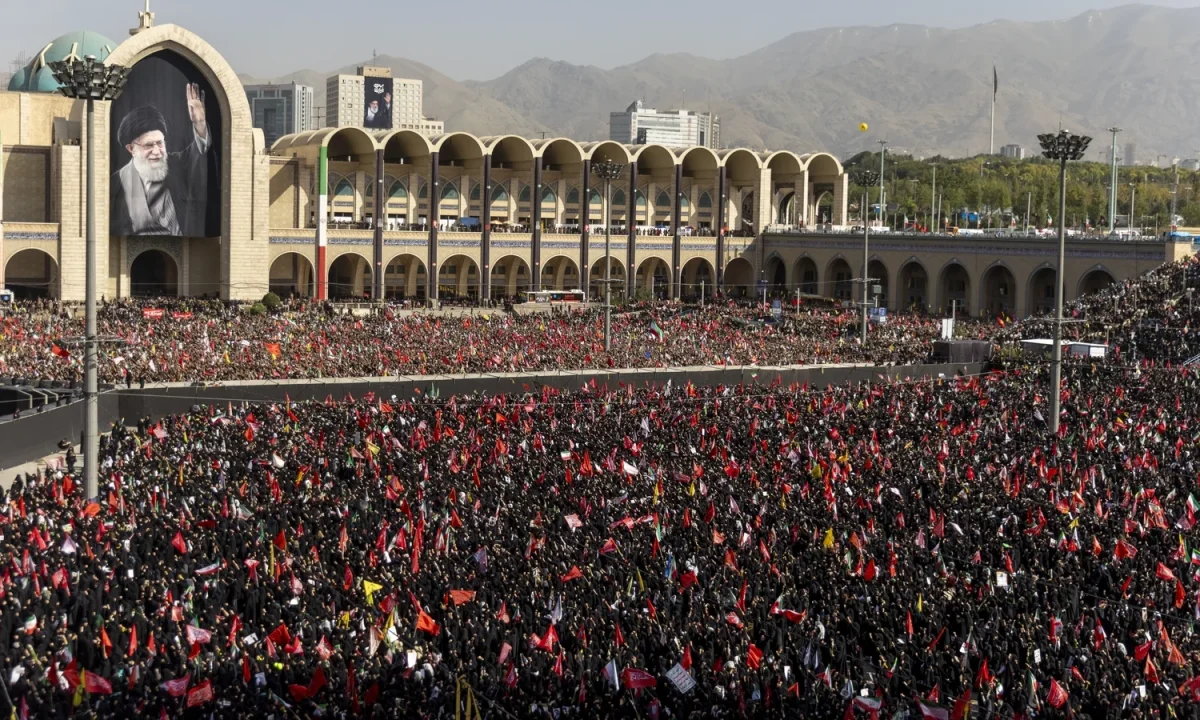
Tens of thousands of Iranians poured into Tehran’s sprawling outdoor prayer grounds to glimpse the coffin of Ayatollah Ali Khamenei, the man who led the Islamic Republic for 37 years before being killed at the outset of the US-Israeli war on Iran.
Across the crowd, mourners raised posters and A4 printouts bearing images of Khamenei and of his son, Mojtaba Khamenei, who has succeeded him as supreme leader.
With sweeping funeral processions, Iran is turning Khamenei’s death into a vast public display of loyalty to the Islamic Republic, its clerical order and its revolutionary creed.
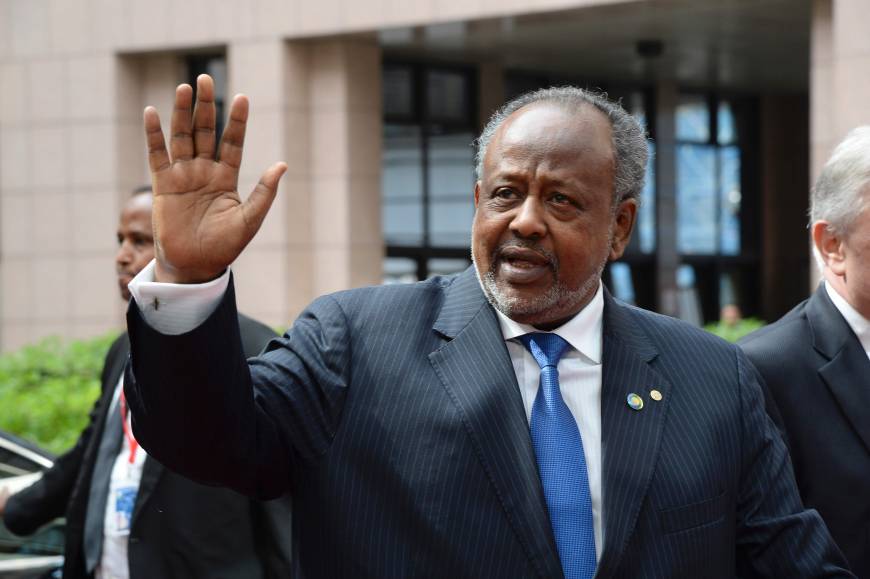
After senior Iranian officials and visiting foreign dignitaries paid their respects during an indoor lying-in-state, television footage showed Khamenei’s coffin, along with those of several relatives killed in the same airstrike, being moved onto an outdoor stage for the public to see from afar.
“Let us wail!” a compere urged the crowd over a loudspeaker.
“Everybody chant oppressed, everyone say Hussein,” he called, invoking the Shi’ite tradition of sacrifice and the memory of Hussein, the grandson of the Prophet Mohammad. The crowd answered on cue with cries and chants. The Israeli strike that killed Khamenei also killed his daughter, grandchild, daughter-in-law and son-in-law, according to Iranian state media.
The five coffins, each draped in the Iranian flag and set on a raised platform, included a tiny one for his 14-month-old granddaughter.
Iran’s military and security institutions vowed vengeance for Khamenei’s killing, while chants of “Death to America” rang across the Mosalla, according to state broadcaster Seda va Sima.
Iran is staging mass funeral processions for Khamenei
Destructive wars and no peace
The funeral comes at a pivotal moment for Iran, where clerical rulers backed by the Islamic Revolutionary Guard Corps (IRGC) draw renewed confidence from having endured what they viewed as an existential war with their most powerful enemies.
Yet beneath the show of unity and reverence, analysts say backing for the Islamic Republic has thinned to a fragile veneer.
Mojtaba Khamenei, long regarded as close to the elite IRGC, has not appeared in any new image since he was wounded in the strike that killed his father.
Weeks of war began with Khamenei’s killing on 28 February, as thousands of US and Israeli airstrikes hit military sites as well as energy and civilian infrastructure. Iranian state media says the attacks killed more than 3,000 people in Iran.
Iran struck back with attacks on US bases, missile fire toward Israel and a string of assaults on energy targets in Gulf Arab states, while disrupting oil shipping through the Strait of Hormuz. At least 13 US troops have been killed.
The war’s aftershocks have killed thousands more across the region, especially in Lebanon, where Israel is still fighting the Iranian-backed Hezbollah group. Israeli attacks and demolitions have levelled vast stretches of civilian areas in southern Lebanon.
By early April, the US and Iran had reached a shaky ceasefire, and in June they signed an initial agreement to stop the fighting, though some tit-for-tat attacks still persist.
The long-running US-Iran confrontation has helped keep the Middle East locked in conflict, alongside Israel’s own wars against Iranian allies and its campaigns against Palestinians.
Observers say the war, which killed many senior Iranian military and security officials, has strengthened hardline figures in Iran who appear readier than the late Khamenei was to strike directly at their adversaries.
Ali Khamenei’s coffin, along with those of his relatives killed on 28 February, are displayed in Tehran’s Grand Mosalla
Shit’ite Martyrdom
Under Iran’s theocratic system, Khamenei was more than head of state or the leader of a revolutionary project: he was also seen as the earthly representative of Shi’ite Islam’s 12th imam, who disappeared in the ninth century.
His death at the hands of an enemy fits squarely into the powerful Shi’ite tradition of martyrdom and mourning.
Khamenei’s coffin was unveiled late on Thursday. Yesterday, it was laid in state in the vast prayer hall built in honour of his predecessor, Ayatollah Ruhollah Khomeini.
The coffin will remain in the Mosalla until tomorrow evening.
In Islam, burial is generally expected within a day of death, but officials delayed the funeral because of the dangers of staging a mass ceremony during the war. It was postponed until after last month’s interim truce deal was reached.
Following what authorities describe as a massive procession through central Tehran on Monday, the remains will be taken on to the seminary city of Qom, the heart of Iran’s Shi’ite religious hierarchy, for ceremonies on Tuesday.
Ceremonies will then move to the Iraqi shrine cities of Najaf and Karbala on Wednesday, with prominent figures from Iran’s regional network of Shi’ite proxies expected to attend.
He is due to be buried on Thursday, after another procession, in Mashhad near the tomb of Imam Reza, a site of immense devotion in Iran.
Authorities say they plan to mobilise millions for major processions in the coming days, offering transport, food and lodging in a bid to swell attendance and draw more of Iran’s population of more than 90 million into the commemorations.