
Tuğba AltunFriday June 19, 2026
Somalia’s ports minister has called on those chasing power to contest elections instead of reaching for weapons, saying the country is moving toward a political order in which citizens, not clan elders, will decide its future.
Abdulkadir Mohamed Nur also singled out Türkiye for what he described as exceptional and long-running support, saying no other international partner has matched its breadth of assistance to Somalia.
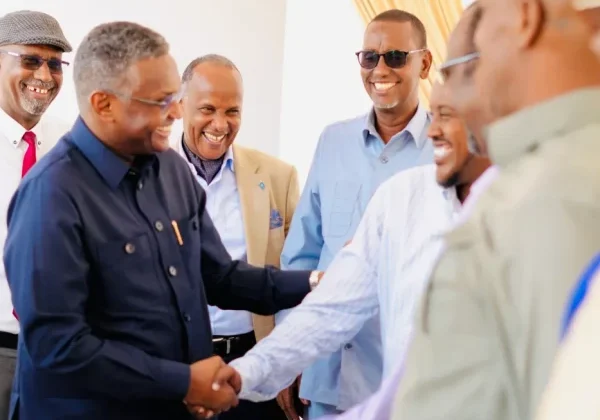
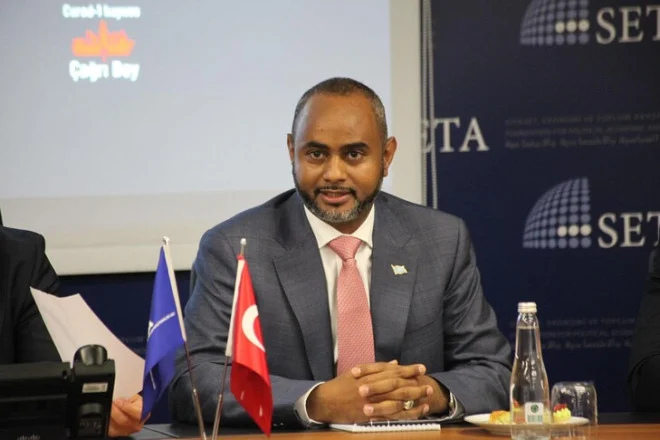
“There was an international presence in Somalia, but there was no one like Türkiye, which has provided multidimensional support for Somalia’s development,” Nur said Wednesday at a panel hosted by the Foundation for Political, Economic and Social Research (SETA) in Ankara on Türkiye-Somalia relations and regional developments.
Nur said the arrival of the Cagri Bey drilling ship had boosted confidence among Somalis, adding that economic and fisheries-sector challenges could be overcome and that those efforts would further deepen bilateral ties.
Turning to political reform, he said Somalia is in the middle of a shift to a “one person, one vote” system after decades of indirect, clan-based elections.
Somalia has 275 members of parliament, he noted, explaining that under the old 4.5 clan-sharing formula, clan elders chose lawmakers without direct participation from the public, while parliament elected the president, who then appointed the prime minister.
He said reforms introduced in 2016 widened participation by allowing 51 clan representatives to elect lawmakers, and that number rose to 101 in 2022.
The newest changes, Nur said, are designed to let citizens vote directly while Somalia continues its campaign against terrorism.
Disinformation ‘to portray Somalia negatively’
Nur also alleged that some countries are bankrolling disinformation efforts aimed at casting Somalia in a bad light.
“Some countries are paying for disinformation campaigns to portray Somalia negatively,” he said.
He argued that Somalia’s gains in security and trade rarely receive the attention they deserve abroad.
“There has been a major improvement in security. They do not report the positive developments, but when there is a small negative incident, they exaggerate it,” he said.
On offshore energy, Nur said Somalia had signed earlier deals with Western companies that yielded nothing, while the current agreement with Türkiye covers three offshore blocks.
He said the Oruc Reis and Cagri Bey vessels are still operating off Somalia’s coast, with Türkiye securing the ships, transferring technology and investing in the country.
Rejecting claims that Türkiye is taking advantage of Somalia’s natural wealth, Nur said Turkish investment would serve not only Somalia but the broader East African region.
He also dismissed assertions that Türkiye would receive only a 5% share of oil extracted from Somali waters, calling the claim “disinformation” and saying energy experts had been invited to review the agreement and show the allegations were unfounded.
Opponents supported by some states
Nur said opponents of the “one person, one vote” model were being backed by foreign governments.
“Some politicians who fail to see the future oppose it. They are also supported by some states,” he said.
Pointing to municipal elections in Mogadishu that concluded without security incidents, Nur said Somalia has now moved into regional elections, after which lawmakers will choose regional leaders.
He accused two opposition leaders in Mogadishu of trying to stir instability by appearing with several dozen armed supporters, saying some media outlets then used the images to suggest the country was sliding into chaos.
The group dispersed soon afterward without any violence, and the Somali public did not back the move, according to Nur.
He said anyone seeking political power should now “choose the ballot box, not war.”
“We want to move to a system in which Somalia’s future is shaped by the decisions of its people,” he said, adding that the transition would be difficult but describing the model as tested and workable.
Importance of connectivity
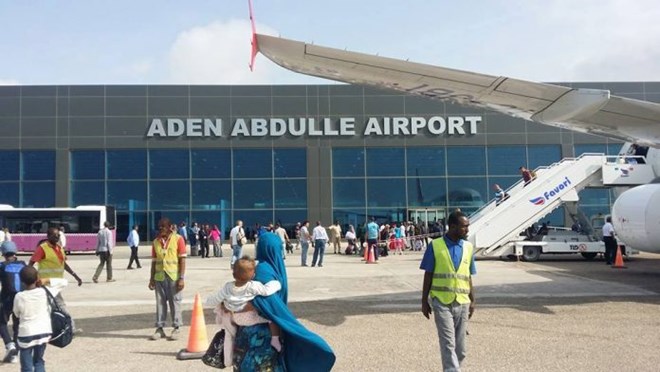
Nur also emphasized the role of connectivity, saying improving maritime transport has been among the ministry’s key priorities.
He said shipments between Türkiye and Somalia once took about 60 days because they moved through third countries, but a direct cargo route has cut that time to 25-30 days.
Products sent from Türkiye to Somalia no longer need to be transshipped through other ports, he said, and stronger demand has already led to more commercial voyages between the two countries.
Nur further claimed that Somalia’s oil potential became a target after al-Shabaab stepped up attacks in February 2025, alleging that disinformation campaigns were driven by major powers seeking to block new countries or companies from entering the sector.
He said terrorism was also instrumentalized during that period, but added that the effort failed with Türkiye’s support.
*Writing by Gizem Nisa Demir in Istanbul