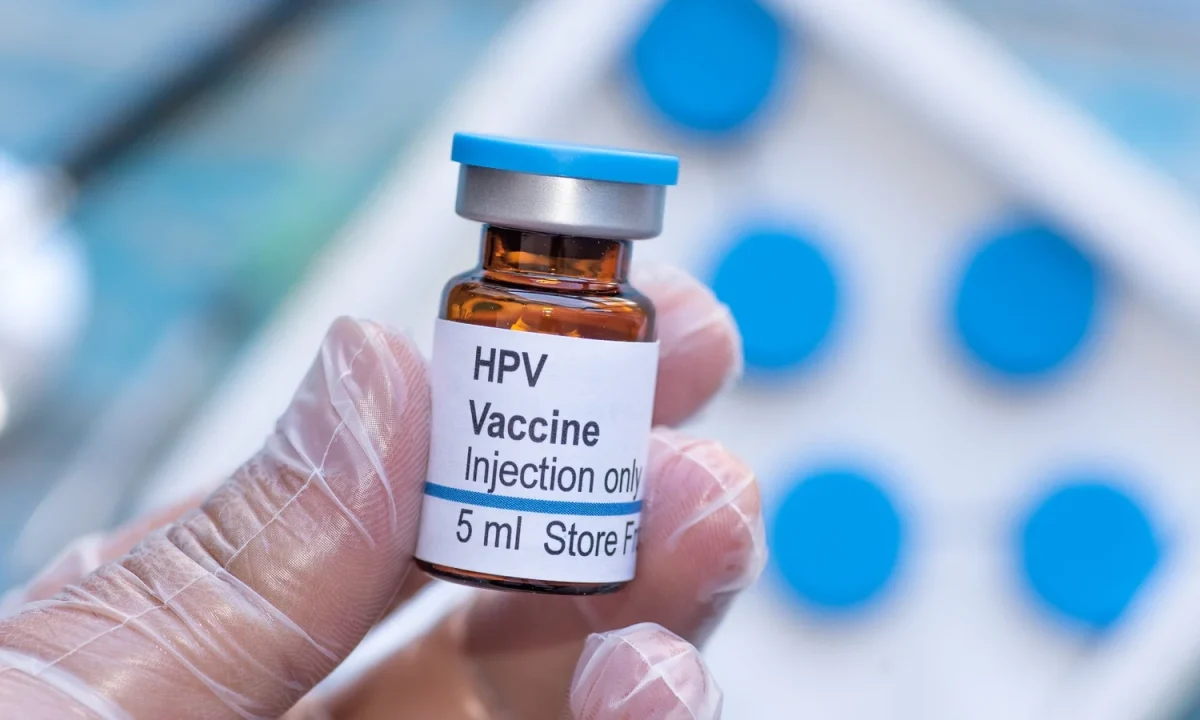
For women vaccinated against HPV at ages 12 and 13, the threat of dying from cervical cancer before 30 has all but vanished, according to a major UK study that points to the striking impact of the immunisation programme.
The research, published in the medical journal The Lancet, found that in England there were no cervical cancer deaths among women aged 20 to 24 between 2020 and 2024 — the first time that has happened.
In the absence of vaccination, researchers said about 23 deaths would have been expected.
Led by Queen Mary University of London and funded by Cancer Research UK, the study also showed an 80% drop in cervical cancer deaths among women aged 20 to 24 from 2015 to 2019.
By 2020, the earliest girls to receive the vaccine had reached their 20s.
“I don’t think there was a single year before we had vaccination where there were no deaths (from cervical cancer),” Queen Mary University of London lead researcher Professor Peter Sasieni told RTÉ News.
“The key takeaway is that the HPV vaccine works and we’re able to make it work on a population scale,” he said.
The report found that, up to the end of 2024, HPV vaccination in England had averted almost 200 cervical cancer deaths.
It estimated that vaccination cut the risk of death by 100% in women under 30, and by 63% in women aged 30 to 34.
However, the study noted that “in women aged 30 to 34 years, not only were a smaller proportion vaccinated (under 50% even in 2024), but most of those will have been vaccinated at age 15 to 18 years when they might have already been infected by HPV16 and/or HPV18, and thus the vaccine will have been less effective.”
“What we are seeing is just the tip of the iceberg, we’re looking at the women who were vaccinated… so those 12 and 13-year-olds who were vaccinated in 2008 are only just 30 now… but I have every confidence as those women born between 1996 and 2005, as that group of women and Gen Z, as they age, we’ll see almost no cervical cancer deaths in that group and that’s going to benefit them through their lifetime,” said Prof Sasieni.
Before the Covid-19 pandemic, HPV vaccine uptake in England had been running at 80 to 90%.
The late Laura Brennan became a prominent campaigner for the HPV vaccine
However, Prof Sasieni said recent declines in uptake are a cause for concern.
“Something happened and I don’t know exactly what, there’s greater vaccine hesitancy, there’s more school absenteeism, but in England as a whole it has dropped down to 76%, I believe and in London it’s just 61% and that means there are local authorities where under 50% of girls have been vaccinated, and if that’s what’s going on we’re going to see a resurgence of cervical cancer and young women dying of cervical cancer,” said Prof Sasieni.
“Tens of millions of people have had this vaccine, we know that it is extremely safe and now, that it’s extremely effective, this is a vaccine that can prevent one of the few cancers that affects people in their 20s and 30s, I’d really encourage everyone to get that vaccine,” he added.
In Ireland, uptake of the HPV vaccine among girls fell from 87% in 2014 to 2015 to 51% two years later.
Latest available figures from the Health Protection and Surveillance Centre show overall uptake among first-year secondary school students — boys and girls — in the 2023/2024 academic year was 74.9%, down 3.96% on the year before.
The WHO has set a 90% uptake target, and Ireland has committed to reaching it as part of its goal to eliminate cervical cancer by 2040.
“I think this research really proves that we need to have our 12 and 13-year-old girls and boys vaccinated when the opportunity arises at school because if it can save any child from treatment in the future, which is very invasive, or indeed from death, this is phenomenal,” Director of Clinical Affairs, Irish Cancer Society, Amy Nolan said.
Before her death from cervical cancer at 24, Laura Brennan became one of Ireland’s most recognisable advocates for HPV vaccination.
A catch-up vaccination campaign for children who missed the HPV vaccine in first year of secondary school has been named in her honour.
It was offered to fifth and sixth-year students during the academic year that has just ended, and will be broadened in the coming school year to include students from second to fifth year.
Reacting to the findings in Prof Sasieni’s report, her brother Kevin Brennan told RTÉ News his sister would have been “absolutely thrilled to have heard today’s findings”.
“She always said this vaccine saves lives, it could have saved mine, but it could save yours, and the findings today demonstrate so clearly how effective the HPV vaccine is at preventing HPV related cancers and deaths,” Mr Brennan said.
“I suppose there’s just an onus on everyone now to redouble their efforts and make sure vaccination rates remain high and improve upon them so that no family receives the devastating news that we received when Laura was just 24 years old.”
The HSE also welcomed the study, describing it as “extremely positive” and saying it offered “further evidence of the life-saving impact of HPV vaccination.”
The vaccine was introduced in England for girls in 2008 and for boys in 2019.
In Ireland, it was rolled out for girls in first year of secondary school in 2010, and for boys in 2019.
In 2020, the World Health Organization set global targets to eliminate cervical cancer as a public health problem, calling on countries to put measures in place to meet its 90-70-90 goals by 2030.
The strategy aims for 90% of girls to be vaccinated against HPV by age 15, for 70% of women to be screened by age 35 and again by 45, and for 90% of those identified with cervical disease to receive treatment.
In 2024, Ireland launched a Cervical Cancer Elimination Action Plan aimed at achieving elimination by 2040.
HPV refers to a group of viruses spread through sexual contact that often cause no symptoms.
Around 13 high-risk HPV types are known to be responsible for 99.7% of cervical cancers.
The vaccine also offers protection against genital warts and head and neck cancers, including cancers of the mouth and throat.
Additional reporting: PA