
By Joshua Kloke and Simon HughesMonday June 22, 2026
After scoring two goals at the 2018 World Cup, Mohamed Salah is on the board in the 2026 edition (Jared C. Tilton / FIFA / Getty Images)
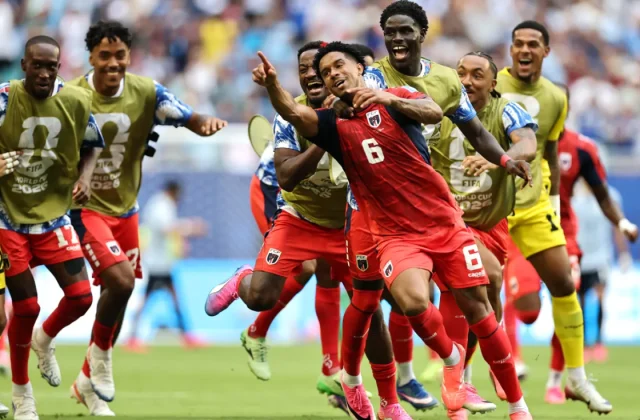
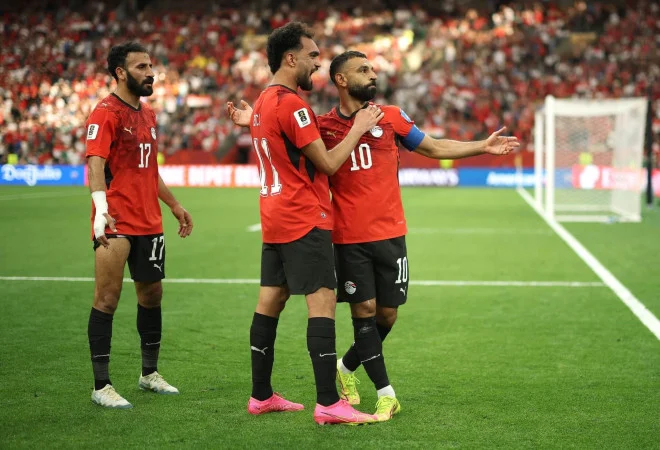
VANCOUVER, British Columbia — Mohamed Salah delivered the moment Egypt had waited generations for, striking in the 67th minute to cap a stirring comeback and secure a 3-1 victory — the national team’s first win in World Cup history.
New Zealand had set the tone early, with Finn Surman powering home a header in the first half while Egypt laboured badly in attack and the Kiwis brought relentless energy.
But the game turned sharply after the break. Egypt came out with purpose, found two goals in a nine-minute spell and seized control before adding another late on, sending thousands of delighted supporters in Vancouver into celebration and lifting the Pharaohs to the top of Group G on four points.
Our writers break down the key talking points from BC Place:
It had to be Mohamed Salah
For years, Salah has carried the burden of Egyptian football history, especially when measured against the country’s golden generation that arrived before his international debut.
Unlike the players who dominated from 2006 to 2010 and collected three straight Africa Cup of Nations titles, Salah has never won the tournament himself — he has lost in two finals — and although he has scored the goals that took Egypt to two World Cups, the team had never won a match at the finals.
That changed in Vancouver on Sunday, when Salah helped swing the contest Egypt’s way after a much improved second-half display.
There has long been a sense that the 34-year-old no longer glides across the pitch with quite the same sharpness, and Egypt have used him differently at this tournament. Instead of operating on the right, as he did so effectively for years at Liverpool, he has been deployed through the middle, a move manager Hossam Hassan believes can bring him more into the game.
Against Belgium in the opening match, the approach made sense because the opposition defended high and the contest remained open. New Zealand offered a very different puzzle for Egypt, especially after the early goal. Big, physical and disciplined, they dropped deep in the first half and looked to spring forward on the counter.
With the midfield congested, Salah found it difficult to carve out room. At Liverpool, his experience has allowed him to drift into matches and eventually impose himself. Here, without the same level of quality around him, he could not simply wait for the action to find him.
Hassan altered the shape after the interval, pushing Salah higher and effectively using him as a centre-forward. The adjustment paid off. With Emam Ashour, a more natural midfielder, providing additional defensive cover, Egypt’s full-backs were able to join the attack more freely. Their equaliser — Mostafa Ziko’s header — came from a Mohamed Hany cross, and Salah, now asked to finish rather than fashion chances, soon drove them in front.
Trezeguet added Egypt’s third, but it was Salah’s goal that mattered most, and it will echo through the country’s football story for years to come.
Elation at Egypt’s milestone — and what could follow
The mood before kickoff was far more tense than celebratory, a marked contrast to the carnival atmosphere that preceded Canada’s dramatic win over Qatar in this same stadium three days earlier. Nervousness hung in the air. Neither New Zealand nor Egypt had ever won a World Cup finals match, meaning the day would either produce history or prolong disappointment.
The stadium was overwhelmingly behind Egypt, as were most of the journalists in the media tribune. Their expressions told the story after a dismal first-half showing from Salah and his teammates.
But football rewards persistence, and Egypt’s supporters gradually found their voice again after the break as the chances began to pile up. It was a reminder of what a first World Cup win — achieved in Egypt’s fourth appearance at the tournament — can mean to a nation. When Salah scored the winner, journalists jumped to their feet, embraced nearby compatriots and celebrated wildly.
You only get your first World Cup win once. And the way that earlier anxiety gave way to pure joy showed exactly why it matters so deeply to supporters who have endured so much heartbreak.
Now, what’s possible for Egypt? According to The Athletic’s World Cup tracker, the North African nation has over a 99 per cent chance of advancement and a 61 per cent chance of topping the group. More history could be in the offing.
How this result impacts two co-hosts
The ripple effects of Egypt’s victory extend to both the United States and Canada.
With every Group G match before this one ending in a draw, Egypt now sits in prime position to finish first. A win or even a draw against Iran in Seattle on Friday should be enough to send them through to a round of 32 match in the same city on Wednesday, July 1, against a third-place side.
And if Egypt win that game? They could be on course for a round-of-16 meeting with the United States, provided Mauricio Pochettino’s team also get through their own last-32 fixture, of course.
It may be premature to map the bracket so far ahead, but there is a scenario in which Egypt stands between the U.S. and the quarterfinals.
As for Canada, The Athletic had identified Egypt before kickoff as the most likely round-of-32 opponent for Jesse Marsch’s side if they were to win Group B. At the moment, finishing first in the group appears more likely to produce a meeting with the third-place team from Group G, which would most likely be Iran.
If that opponent ends up being New Zealand, their disciplined defending could allow Canada to enjoy more possession. That is not always where the Canadians have looked most comfortable. Without injured midfielder Ismael Kone, their chief creative outlet, the task would become even harder.
Surman heads in a piece of MLS history
It is only a footnote in the bigger story now, but Surman’s opening header carried a small slice of history: it was the sixth goal scored by an MLS player at this World Cup, the highest total the league has ever produced at a single edition of the tournament. The previous mark was five, set in 2002. Lionel Messi, of course, accounts for half that tally with his hat-trick against Algeria.
Even so, for Surman, the record is a quirky one.
Across 46 MLS appearances for the Portland Timbers, he has not scored. Yet on the game’s biggest stage, the athletic defender found the net.
He would almost certainly trade that personal milestone for three points, especially with New Zealand now facing the edge of elimination ahead of Friday’s final group match against Belgium, but it remains a notable achievement for the 22-year-old Wales-born player.