US Treasury Secretary Scott Bessent has promised an aggressive campaign to choke off Iran’s economy, widening Washington’s threat of secondary sanctions and warning that countries refusing to join the effort could face severe repercussions.
His remarks came nearly six months into a war with Iran that has settled into a stalemate, as peace negotiations remain stalled and Tehran blocks most shipping through the strategically vital Strait of Hormuz.
- Advertisement -
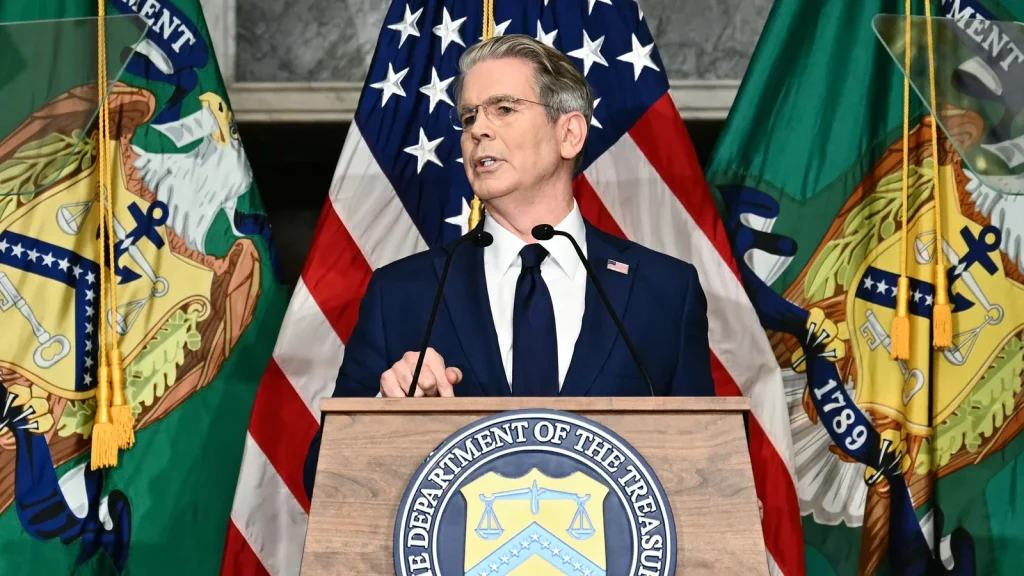
“Around the globe, our objective is to sever every economic lifeline that sustains this tyrannical regime until Tehran stands alone,” Mr Bessent told reporters at a press conference.
“We are going to hold everyone accountable,” he said. “This is economic asphyxiation of this regime. We are launching an economic onslaught against Iran’s financial connections around the globe.”
Watch: US sanctions on Iran ‘economic asphyxiation’ – Bessent
The US Treasury Department said it had identified the networks, intermediaries and financial routes Iran relies on to smuggle oil and circumvent sanctions.
Washington, it said, would work with its partners to pursue every source of Iran’s “illicit revenue”.
Mr Bessent warned that nations declining to participate in the US sanctions campaign would “share in the isolation” imposed on Iran.
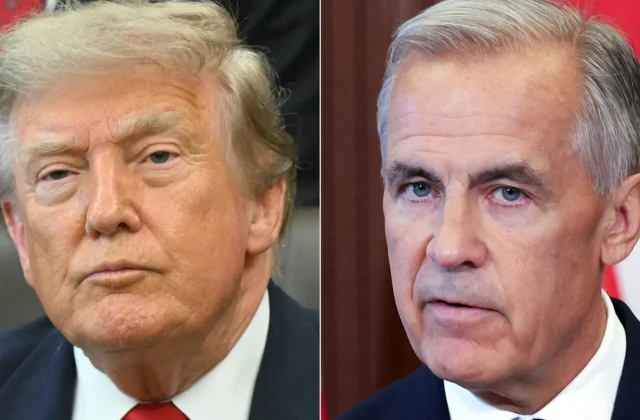
He said US President Donald Trump was contacting world leaders and asking them to halt their dealings with Tehran.
Iranian foreign ministry spokesman Esmaeil Baqaei said participation in the campaign would “definitely have its own consequences”.
The Treasury Department said it had “issued determinations against five critical sectors – digital assets, technology, gold, aviation, and shipping – that the Iranian regime uses to try to prop up its failing economy”.
Iran has threatened to stop all oil exports from the region if the US goes ahead with its plan
Mr Bessent also said any organisation “that facilitates money laundering on behalf of Iran will be removed from the US dollar system”.
Asked whether Chinese banks conducting business with Iran might be targeted, he replied that “no one is above the reach of US sanctions”.
Earlier, in an opinion column for the Financial Times, the Treasury secretary said an “economic D-Day” had begun against Iran.
The Middle East war began on 28 February, when the United States and Israel launched a massive bombing campaign against Iran, prompting Iranian retaliation across the region.
Oil exports plunge
Iran’s oil shipments through the Strait of Hormuz have collapsed under the US naval blockade, dropping from two million barrels a day before the war to 0.4 million by mid-August, according to maritime tracking company Kpler.
The Islamic republic has also endured punishing international sanctions for decades. Pressure eased briefly under a 2015 nuclear agreement, but Mr Trump later abandoned the deal and revived a “maximum pressure” campaign.
Iran resisted those measures and, before the war, was still exporting millions of barrels of oil, mainly to China, while using intricate international financial networks to evade sanctions.
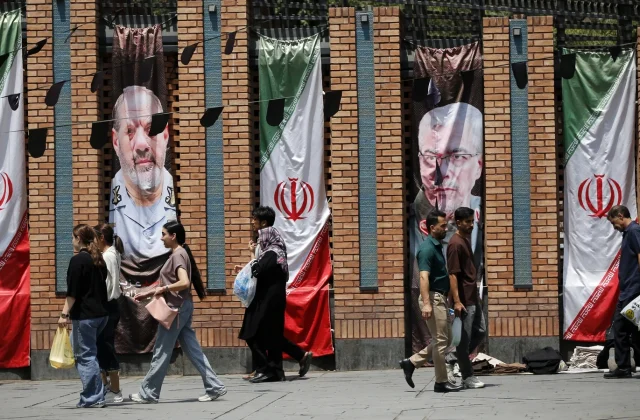
For ordinary Iranians, the confrontation threatens to deepen the hardship created by years of rampant inflation. Rising prices helped drive massive anti-government protests in December and January.
Sarah Hassanbeigi, a 32-year-old pharmacist in Tehran, described the strain in stark terms: “It’s really very difficult. I don’t think people can really take this much longer.”
Yesterday, Iranian President Masoud Pezeshkian acknowledged that the country was facing “many problems in society”.
“We are striving with all our hearts to overcome inflation, livelihood problems, unemployment, and to secure the future of the people, so that they can live with dignity and pride,” Mr Pezeshkian said.
Delegation from Pakistan
Last week, the Iranian president, viewed as a relative moderate, said Tehran should “bring the war to an end now as we are in a position of power and dignity”.
His comments followed supreme leader Mojtaba Khamenei’s decision to appoint hardliners to important security posts.
Ms Hassanbeigi said she wanted the conflict to end. “Naturally, negotiations mean that both sides have to compromise. My personal opinion is that Iran should compromise now,” she told AFP.
Throughout the war, mediators have continued diplomatic efforts aimed at securing a negotiated settlement.
Today, Pakistan’s army chief was expected to travel to Iran. Islamabad played a central mediating role in talks that produced an April ceasefire, although that agreement later collapsed.
Omani Foreign Minister Badr al-Busaidi was also due to arrive in Iran tomorrow, with Muscat and Tehran seeking an agreement to regulate passage through the Strait of Hormuz.