
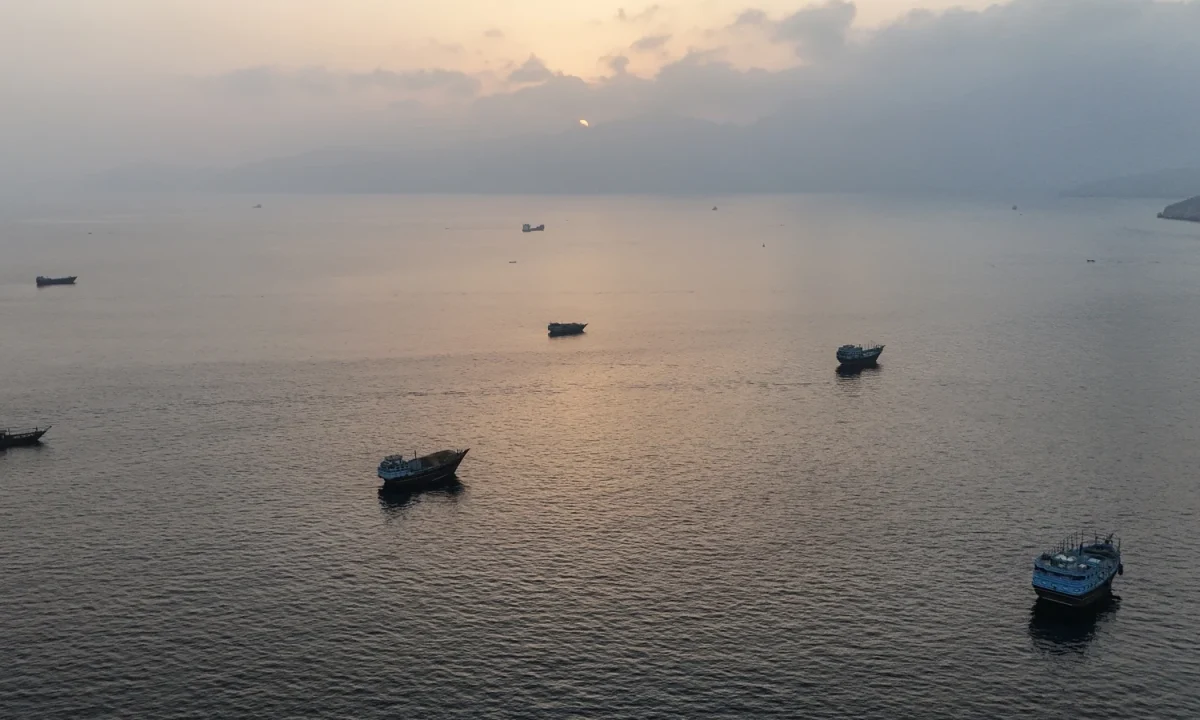
Diplomats from the United States and Iran have opened indirect technical talks in Doha, aiming to settle how shipping moves through the Strait of Hormuz and to lock in a durable ceasefire, according to a source with direct knowledge of the negotiations and an Iranian official.
Those discussions stem from a 14-point interim accord signed last month, designed to stop the war that began with US-Israeli strikes on Iran in February, reopen the strait and launch a 60-day negotiating window toward a permanent peace agreement.
But public disagreements between Washington and Tehran over what the interim deal actually requires have spilled into tit-for-tat military strikes over the past week, underscoring how little headway appears to have been made on harder questions, including Iran’s nuclear programme.
President Trump said the Doha talks were about the denuclearisation of Iran
Iran is pushing for international acceptance of its control over the strait and of its right to charge fees to ships entering or leaving the Gulf, according to two senior Iranian sources, even if force is required to achieve that.
US President Donald Trump, who has repeatedly made the removal of Iran’s highly enriched uranium a central objective, told reporters that “the denuclearization of Iran is moving along well”, while offering no further detail.
“They’ve had very good meetings, and we’ll see,” he said of the Doha talks, despite no indication there that the nuclear file had yet come up.
Focus on Hormuz, frozen assets
The indirect negotiations, with Qatar and Pakistan acting as mediators, began last night and were still under way today, the Iranian official said.
The talks are organised around meetings between lead negotiators and technical experts, the source familiar with the process said, adding that Mr Trump’s son-in-law Jared Kushner and envoy Steve Witkoff met Qatar’s prime minister to help prepare the ground but were not expected to take part.
Mr Kushner and Mr Witkoff later held talks with Qatar’s emir on the US-Iran negotiations and on developments in Lebanon, where a parallel confrontation between Israel and the Iran-backed militant group Hezbollah broke out in early March.
Preparations for the funeral of former Iranian leader Ali Khamenei continued in Teheran
Iran’s Deputy Foreign Minister Kazem Gharibabadi led a delegation that included officials from the foreign ministry, central bank and agriculture ministry, meeting Qatar’s prime minister and conferring with mediators.
Tehran has said publicly that its priorities are an agreement on management of the strait and the release of $6 billion in frozen Iranian assets, and the Iranian official said this round of talks would centre on those two issues.
For Washington, the main goal is to guarantee the uninterrupted flow of traffic through the strait, the source with knowledge of the talks said.
Iran’s state media reported today that a foreign container ship ran aground in the Strait of Hormuz after straying into shallow waters outside the shipping lane designated by Iranian authorities.
“Hormuz continues to reopen but it’s patchy, unpredictable, and not fully transparent,” said Vandana Hari, founder of oil market analysis provider Vanda Insights.
Intensive diplomacy on Lebanon
The war set off Iranian attacks on Gulf states hosting US military bases, killed thousands of people, mostly in Iran and Lebanon, and drove oil and fuel prices higher.
Mr Trump is under domestic pressure to limit the war’s economic damage before midterm elections in November, while also facing criticism from within his own party that the interim accord falls short of US goals.
In Iran, the theocratic leadership emerged from the war intact, but public anger has grown over an economy left in ruins.
Oil prices fell again today, with US West Texas Intermediate crude dropping to its lowest level since February 27 – the day before the war began – at just under $69 a barrel.
Israel has said it would keep its forces in southern Lebanon
The interim arrangement between the US and Iran also calls for an end to the fighting in Lebanon.
Washington has supported a separate set of talks between Israel and Lebanon’s government, which yielded a framework security deal rejected by Hezbollah and viewed by analysts as a possible step toward entrenching Israel’s occupation of southern Lebanon.
Diplomatic contacts over Lebanon among parties including the US remained intense through yesterday evening, the source with knowledge of the talks said.