
Saturday June 20, 2026
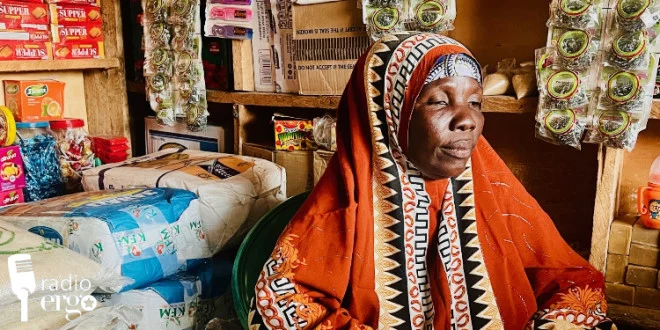
Hafso Mursal sits inside the shop she expanded using a business loan in Hagardera refugee camp/Ahmed Abdullahi Jama/Ergo
For Hafsa Mursal Abdi, a 28-year-old refugee mother in Dadaab, a loan received in February has done more than keep her shop afloat — it has restored the livelihood of her seven children.
With support from a local organisation, Hafsa was able to restock her shop in Hagadera camp with fast-moving food staples after a year of struggling for capital. The business, once on the verge of stalling, is now back on its feet.
“The money helped me a lot. When I received the 100,000 shillings it transformed my business. I now sell rice, flour, sugar, oil, pasta, groundnuts and many other items. The income supports me and my children. I thank God for that,” she told Radio Ergo.
Her shop now brings in regular profits that cover household costs and allow her to make loan repayments on schedule. She has already paid back half of the sum and says she expects to clear the remaining balance soon. Some of the earnings go straight back into the business, while the rest pays for food, school fees, and other family needs. Life, she said, looked very different before the expansion.
“Sometimes we ate and sometimes we did not. But now things are completely different. I can provide breakfast, lunch and dinner for my family – we have food every day,” she said.
This was not Hafsa’s first time borrowing. She opened her shop in March 2024 after taking a 10,000 Kenya shilling loan from the same organisation. The amount was small, but she says it gave her valuable experience and a start in trade.
Her family arrived in Dadaab in 2006 after her father fled insecurity in Jilib, in southern Somalia’s Middle Juba region. For years, they depended heavily on food aid, but Hafsa says the shop has now given them a measure of independence.
Another refugee mother, Maano Mohamud Gagaal, has also turned a loan into a source of steady income. She used 130,000 shillings to buy solar equipment and refrigerators for her shop in Hagadera camp, allowing her to sell ice cream, ice blocks, and cold drinking water — goods that are in constant demand in the hot camp environment.
Maano says the business now earns her about 1,000 Kenya shillings in profit each day. “The loan solved many problems for me. It allowed me to work and provide for my family of five. Today I earn enough from selling ice cream and ice. I repay the loan and still support my household,” she said.
She says the extra income has changed how her family lives, making it possible to pay for food, clothing, healthcare, and other essentials without leaning on relatives or aid agencies. “I am the only one supporting my children. Their food, clothing and healthcare depend on me. Now I can provide what they need through this business,” she said.
Maano’s family fled Mogadishu in 2008 because of insecurity and has lived in Dadaab ever since.
As humanitarian support continues to shrink, Inkomoko loans have become increasingly important for refugee families trying to stand on their own. Business development adviser Adan Mohamed Haji said thousands of households have already benefited from the programme.
To qualify, applicants must already run a business or present a workable business idea. They must also complete at least two business development training sessions offered by the organisation and pay a modest profit-sharing fee under the programme.
“The aim is to help people become self-reliant. Many families previously depended entirely on humanitarian aid, but as assistance decreases, supporting businesses offers a pathway towards sustainable livelihoods,” Adan said.