

Sunday June 14, 2026
Mogadishu (AX) — Somalia’s worsening humanitarian emergency is now shutting the doors of hundreds of health centers, leaving pregnant women, nursing mothers and young children without care as drought, soaring prices and a deepening funding crunch squeeze the country further, CARE warned Thursday.
- Advertisement -
The aid group said nearly 2 million children in Somalia are acutely malnourished, among them almost 500,000 who are suffering from severe acute malnutrition, a potentially fatal condition.
CARE said nearly 50 health and nutrition centers it supported have closed since January 2026 across Puntland State, North Western State of Somalia, Galmudug and Lower Juba. Nationwide, about 500 primary health care facilities have been forced to close because of severe funding shortfalls.
Before those closures, CARE and its local partners were reaching thousands of pregnant women and children each month with malnutrition treatment, maternal health services and other essential support.
“In Galmudug, the situation is catastrophic. Funding cuts have forced the closure of 11 health centres, including mobile clinics, while cash support and water programmes have stopped,” said Abdikadir Ore, Humanitarian Coordinator, CARE Somalia. “Families are now left without healthcare, clean water, or even food. Mothers are watching their children grow weaker, pregnant women have nowhere to go, and preventable diseases like cholera, measles, and diphtheria are spreading. People have simply run out of options. This is not a slow-moving crisis, it is a collapse.”
In Kismayo, CARE nurses and partners said they are seeing more pregnant women reach the remaining facilities exhausted and dehydrated after walking for days without food or water in search of help.
For many families, the agency said, there are no good choices left.
Abdiyo Adan, a mother who once depended on a CARE-supported health facility, said she walked for hours with her baby on her back looking for treatment, only to discover the center had shut down.
“I walked for hours with my baby on my back, hoping to get help,” she said. “When I arrived, I was told the health facility was closed. I felt helpless, it’s like no one cares about us.”
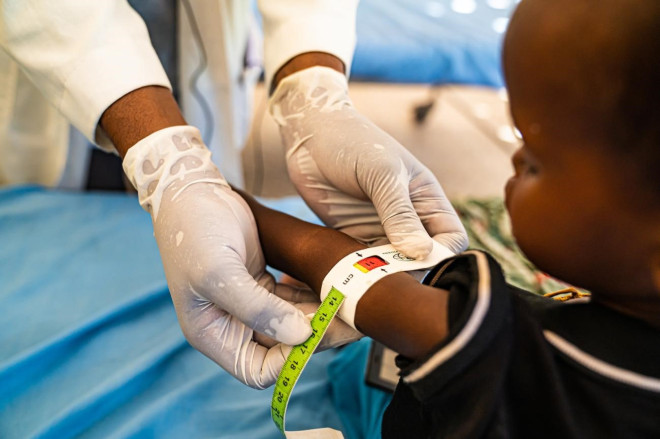
CARE said her child’s mid-upper arm circumference measured 11.3 centimeters, a reading that points to severe acute malnutrition.
“My child is weak and malnourished,” Abdiyo said. “Coming to this health center was our last hope, but now it’s not working.”
The agency also said the price of lifesaving nutrition supplies continues to climb. A carton of therapeutic milk used to treat severely malnourished children rose from $139 in 2024 to $186 in 2025 after major aid funding cuts, and then increased again to $200 in 2026 because of supply chain disruptions and higher transport costs.
CARE said that represents a rise of nearly 44% over two years.
Across Somalia, about 6 million people are facing acute food insecurity as households run through food reserves after years of failed rains, high prices and intensifying drought conditions following weak Gu rains.
“The declining effectiveness and limited circulation of the Somali shilling are further undermining the ability of poor households to access markets and meet their basic needs,” said Aydrus Sheikh Daar, executive director of WASDA, a CARE partner in Somalia.
Everyday essentials are becoming harder to afford, CARE said. In some areas, water prices have surged by as much as 300%, while global supply disruptions tied to the closure of the Strait of Hormuz have pushed up the cost of food, fuel and humanitarian supplies.
Women and children, who account for more than 80% of Somalia’s 3.5 million internally displaced people, are absorbing the heaviest blow, CARE said. The agency warned that women are skipping meals and girls face growing risks of dropping out of school and being pushed into early marriage.
“The hunger crisis unfolding in Somalia is forcing impossible choices on families,” said CARE Somalia Country Director Ummy Dubow. “It is about mothers deciding which child will eat today and women walking long distances in search of water without access to health care.”
CARE said the crisis is being driven by conflict, climate shocks, displacement, economic instability and severe funding cuts. The group also warned that an expected El Niño event between June and July could further worsen food insecurity if flash floods destroy crops and homes.
CARE said it is working with local partners to provide cash assistance, health care, nutrition and protection services where possible, but warned that more cuts are likely unless urgent funding arrives.
“By the time famine is officially declared, it will already be too late for the children who are dying right now,” Dubow said.
CARE urged an immediate and substantial increase in humanitarian funding, with more resources directed to local and women-led organizations. It also called on all parties to guarantee safe, rapid and unhindered humanitarian access and to protect civilians under international humanitarian law.
