
The Democratic Republic of Congo’s Ebola crisis is accelerating, with confirmed infections climbing to 2,973 and deaths rising to 1,309, government figures released Saturday showed, as authorities struggle to contain what has become the country’s fastest-growing Ebola epidemic in its early phase.
The latest data, updated through Thursday, put the case fatality rate at roughly 44%. Officials said 540 patients had recovered, while 766 others were still hospitalized or being kept in isolation.
Contact tracing remains a major weakness in the response. Health officials said teams had reached 73.9% of known contacts, far short of the 90% to 95% coverage public health experts generally view as essential to cutting off transmission.
The virus has also reached another health zone in Haut-Uele province, pushing the number of affected health zones to 48. Active transmission is still being reported in 47 of them.
The outbreak was formally declared on May 15 after infections were detected in northeastern Ituri province. It is the Democratic Republic of Congo’s 17th Ebola epidemic since the virus was first identified in the country in 1976.
Health specialists believe the pathogen, the comparatively rare Bundibugyo ebolavirus (BDBV), may have been spreading for several weeks before authorities detected it.
Researchers say the current epidemic has moved more rapidly in its first months than the 2013-16 West Africa Ebola outbreak, the deadliest on record, which infected more than 28,000 people and killed over 11,000.
Ituri remains at the center of the outbreak, accounting for the largest share of confirmed infections and deaths. Cases have also been reported in North Kivu, South Kivu, Haut-Uele and Tshopo provinces.
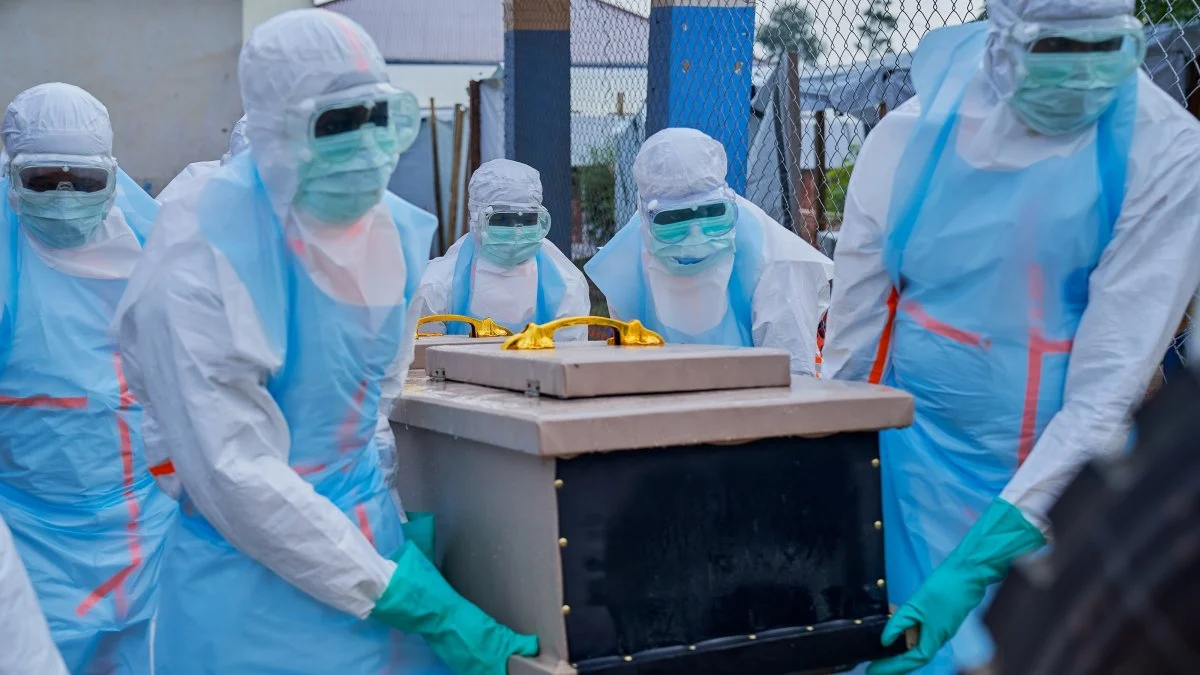
Efforts to stop the disease have been hampered by the realities of eastern Congo, where years of armed violence, displacement, weak health systems and constant population movement have made outbreak control exceptionally difficult. Those pressures have disrupted surveillance, contact tracing, patient isolation and safe burial procedures.
Unlike the better-known Zaire strain of Ebola, Bundibugyo ebolavirus has no licensed vaccine and no approved treatment. Patients are mainly treated with supportive care while scientists evaluate experimental medical options.
Clinical trials that began earlier this year are testing a monoclonal antibody therapy, the antiviral drug remdesivir and the University of Oxford’s experimental ChAdOx1 BDBV vaccine, raising hopes for stronger tools against the virus.
Response teams are also battling public mistrust, misinformation and resistance to testing, including objections to post-mortem examinations. Such obstacles have slowed attempts to identify cases quickly and interrupt chains of transmission.
Security risks have further strained the response. Attacks on health facilities, shortages of medical supplies, limited treatment space and delays by patients seeking care until symptoms become severe have all complicated containment efforts.
The World Health Organization and other response partners have cautioned that the official figures probably do not capture the full scale of the epidemic, particularly in remote and conflict-affected areas where surveillance is incomplete. Some estimates indicate the true number of infections could be two to four times higher than reported.
The outbreak has also moved beyond Congo’s borders. Uganda has confirmed 20 linked cases and two deaths, though its last patient was discharged in mid-July, starting the mandatory 42-day monitoring period before officials can declare the outbreak there over.
Imported cases have been detected in France, and a U.S. citizen who had worked in the DRC has been linked to the outbreak.
The Congolese government, in coordination with the World Health Organization, Africa CDC, Medecins Sans Frontières and other international partners, has widened laboratory testing, opened more treatment centers, expanded isolation capacity and reinforced surveillance and community engagement work.
Authorities have also begun monitoring travelers returning from affected areas, while international donors have pledged hundreds of millions of dollars for health and humanitarian operations.
Officials have noted limited signs of stabilization in some places, including Mongbwalu and Goma. Even so, transmission continues across much of eastern Congo, and health authorities say the epidemic has not yet peaked.
Ebola is a serious viral illness transmitted through direct contact with the blood or other bodily fluids of infected people, or through contaminated surfaces and materials. It is not airborne, and early supportive care can significantly improve a patient’s chance of survival.
The Axadle Times Newsletter
Stay informed on the latest developments in Turkey,
the region and across the world.
SIGN ME UP
You can unsubscribe at any time. By signing up you are agreeing to our Terms of Use and Privacy Policy.
This site is protected by reCAPTCHA and the Google Privacy Policy and Terms of Service apply.