
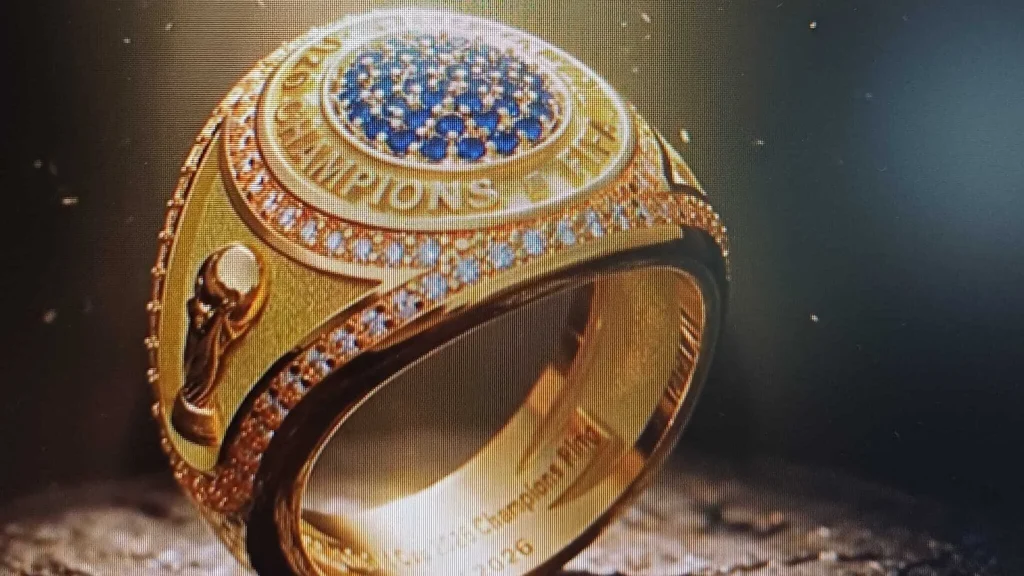
Spain or Argentina will leave tomorrow’s World Cup final with more than the trophy and gold medals: FIFA says the champions will also receive bespoke rings, marking the latest step in the governing body’s effort to give its flagship tournament a distinctly American flavour.
FIFA will award 30 custom-made rings to the victorious team after the final at New York New Jersey Stadium. The captain and head coach will first receive temporary versions in the immediate aftermath of the match.
- Advertisement -
The permanent rings will later be tailored to the winning team’s identity and individually sized before being presented at a subsequent date.
The World Cup trophy will appear on one side, with the opposite face displaying details unique to the champions.
Championship rings have long symbolised success across major North American leagues, including the NFL, NBA, Major League Baseball and NHL. Until now, however, they have never been awarded at a FIFA competition.
The move provides a fitting coda to a tournament in which FIFA has increasingly embraced the spectacle and structure of American sport, reshaping both soccer’s presentation and, at times, its traditional rhythm.
Tomorrow’s final will include a large-scale halftime entertainment show, an attraction more closely linked to the Super Bowl than the World Cup. Mandatory hydration breaks have also effectively split matches into four quarters throughout the tournament.
The three-minute stoppages, scheduled around the 22nd and 67th minutes, have taken place whether or not conditions strictly required them. FIFA has defended the policy as a player-welfare measure during the heat and humidity of the North American summer.
The uniform approach has nevertheless faced criticism from players, coaches and supporters, who say the interruptions break the momentum of matches, allow teams to reset and effectively give coaches two additional tactical timeouts.
The pauses have also opened commercial windows midway through each half, although FIFA has denied that advertising considerations drove their introduction.