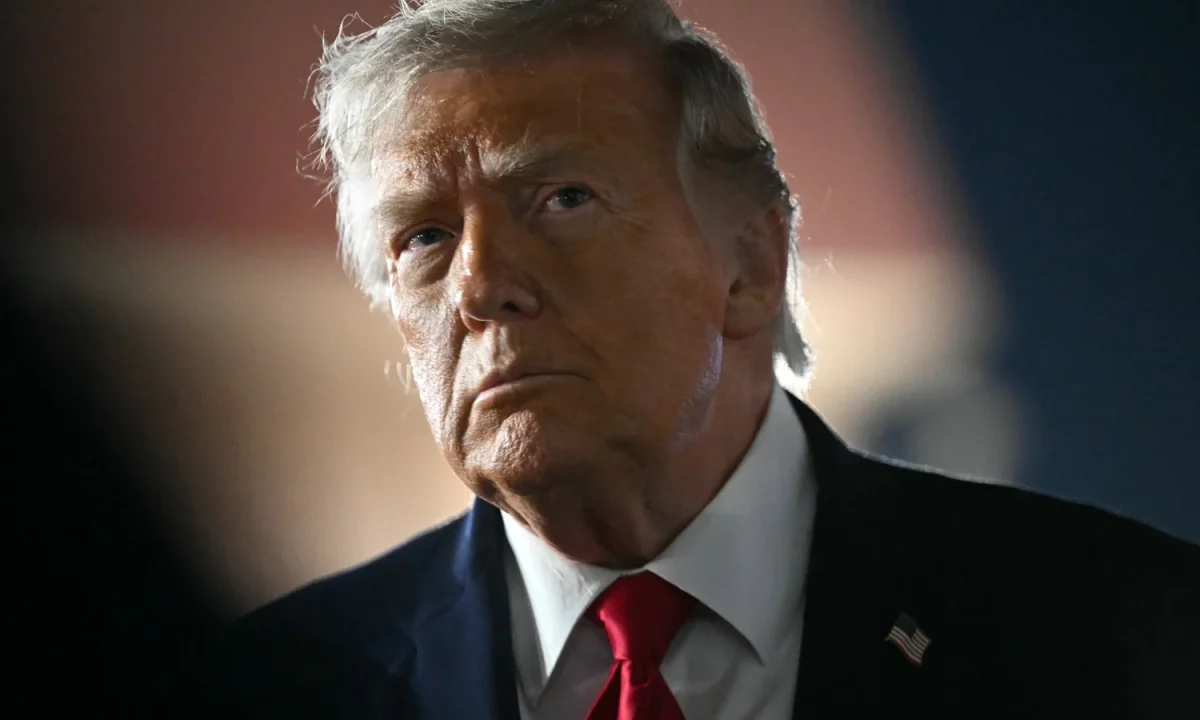
In the first hours after the US and Israel began striking Iran on 28 February, US President Donald Trump set out an expansive wartime agenda: crush Iran’s ballistic missile force, curb its reach across the region and make sure Tehran never acquires a nuclear weapon.
Now, more than three months on and with a preliminary peace deal on the table, the record is mixed. Some of Iran’s military capabilities have been badly damaged. Others remain intact, and a few of the war’s core political aims appear as elusive as ever.
Missiles and drones
Before the war, Iran possessed the largest ballistic missile arsenal in the Middle East, with estimates ranging from 2,500 to 6,000 missiles across several classes. Some could strike Israel at distances of up to 2,000 km, and some were fitted with cluster munition warheads that pose a tougher challenge for air defences.
Iran was also a leading producer of long-range drones, particularly the one-way Shahed model used both by Tehran and by Russia in the war in Ukraine.
US Admiral Brad Cooper told Congress on 14 May that the conflict had pushed back Iran’s ability to manufacture and store missiles and long-range drones by years. He said the US and its allies intercepted more than 1,500 missiles and 6,000 drones during the fighting.
How much of Iran’s missile arsenal survives is still unclear. Even so, Tehran has retained the capacity to threaten US allies. On 6 June, it launched salvos at Kuwait and Bahrain, and on 7 June it fired missiles at Israel. Officials in those countries said the attacks caused no significant damage.
Conventional military
The US military says it has sharply reduced Iran’s conventional ability to project force across the region and endanger American operations.
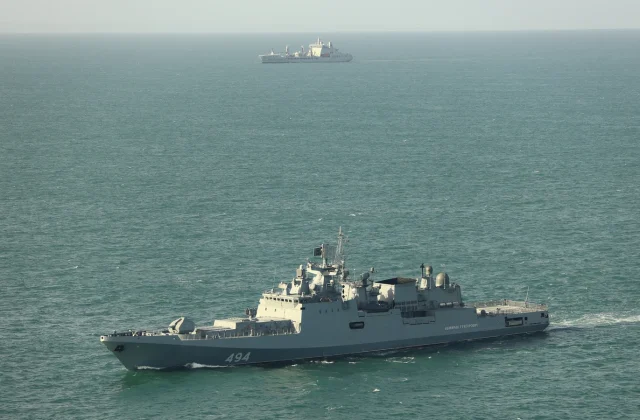
Appearing before Congress, Mr Cooper said US forces destroyed 161 Iranian naval vessels and disabled 82% of Iran’s air defence systems. He also said the Iranian air force, which had been flying as many as 100 sorties a day before the war, is no longer conducting missions at all.
Even so, Iran still managed to effectively close the Strait of Hormuz for the duration of the conflict. Using speedboats, mines, drones and missile boats, it trapped merchant traffic moving through a corridor that carries one-fifth of the world’s oil and natural gas supply.
Nuclear programme
Mr Trump has repeatedly cast the prevention of an Iranian nuclear weapon as his overriding objective. Tehran, for its part, has long insisted it is not seeking a bomb and says its nuclear work is intended for peaceful use.
Yet the war does not appear to have fundamentally altered Iran’s nuclear position. US intelligence assessed last month that Iran would need less than a year to build a nuclear weapon — the same estimate officials gave after the June 2025 strikes on Iranian nuclear facilities.
That issue is expected to dominate negotiations once the framework agreement is formally signed on Friday. Mr Trump has said Iran’s enriched uranium must leave the country, while sources say Iran’s Supreme Leader Ayatollah Mojtaba Khamenei insists it must remain inside Iran.
Proxies
At the White House on 2 March, Mr Trump said Tehran could no longer be permitted to arm and finance the proxy groups in Iraq, Lebanon, Gaza and Yemen that it has used for decades to expand influence and pressure its adversaries.
Since the war began, Iran has shown no sign that it intends to abandon those relationships. Even so, US military assessments and independent analyses suggest Tehran’s network of allied militias is far weaker than it once was.
That erosion was already under way before the first strikes. After the 7 October, 2023, attack on its territory, Israel killed many of Hamas’ senior leaders and thousands of its fighters in Gaza, and also targeted much of Hezbollah’s leadership in Lebanon. Iran also lost a crucial route for resupplying Hezbollah when former President Bashar al-Assad’s rule collapsed in Syria in 2024. At the same time, sanctions and Iran’s broader economic troubles further limited its ability to bankroll those groups.
The proxies themselves have played only a limited part in the war. Hamas has not launched attacks on Israel from Gaza, and the Houthis have not seriously disrupted Red Sea shipping from Yemen.
Hezbollah entered the war on 2 March, firing missiles and drones into Israel. Israel answered with airstrikes and a ground invasion that have killed nearly 3,700 people and displaced 1.2 million in Lebanon. So far, 28 Israeli soldiers and four civilians have also been killed in the fighting.
Mr Cooper told Congress in May that Iran no longer has the ability to reliably provide those groups with advanced weapons, though he did not elaborate on the scope of that assessment.
Regime change
Before the war, Mr Trump urged Iranian protesters to rise against their rulers and said the death of Supreme Leader Ayatollah Ali Khamenei on 28 February represented their “single greatest chance” to take control of the state. On 6 March, he declared that the war would end only with Iran’s “UNCONDITIONAL SURRENDER” and the installation of a new, “acceptable” leader.
The war did not topple Iran’s theocratic system. Still, Mr Trump has argued that he met his objective because Mr Khamenei was succeeded by his son, Ayatollah Mojtaba Khamenei. On 29 March, he described the new leadership as “a new, and more reasonable, regime”.
In recent weeks, however, Mr Trump has stopped publicly repeating his calls for Iran’s leaders to be overthrown.