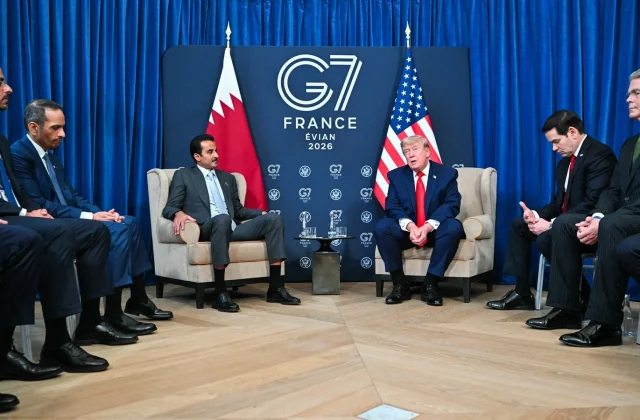
Britain is moving to bolster Ukraine on two fronts at once: helping keep its nuclear power stations running and tightening the economic vise on Moscow. Ahead of a G7 summit session, Prime Minister Keir Starmer said the UK would supply enriched uranium to Ukraine and roll out fresh sanctions against Russia.
Condemning what he called Russia’s “barbaric strikes” on Ukraine, Mr Starmer said the UK was “stepping up” by “choking off the revenues that fuel [Vladimir] Putin’s war and powering Ukraine through the winters ahead”, according to his office.
- Advertisement -
London said the latest sanctions package would target the shadow fleet used to transport Russian oil and gas, along with financial networks accused of helping Moscow dodge Western restrictions.
The measures also focus on three companies and 10 officers from the GRU intelligence agency suspected of covertly obtaining Western technology for the Russian military.
Mr Starmer’s appearance comes after a Russian barrage of missiles yesterday killed at least 11 people across Ukraine and triggered a fire at one of the capital’s most significant Orthodox monasteries.
His office said the energy agreement would “power Ukraine for the next two years”.
Facing pressure at home after his defence minister resigned last week in a dispute over military spending, Mr Starmer is expected to tell fellow leaders that “the G7 should collectively go further to ensure Ukraine secures the just and lasting peace it deserves”.
“We will stand with Ukraine for as long as it takes and this announcement reinforces that,” Mr Starmer said, according to his office.
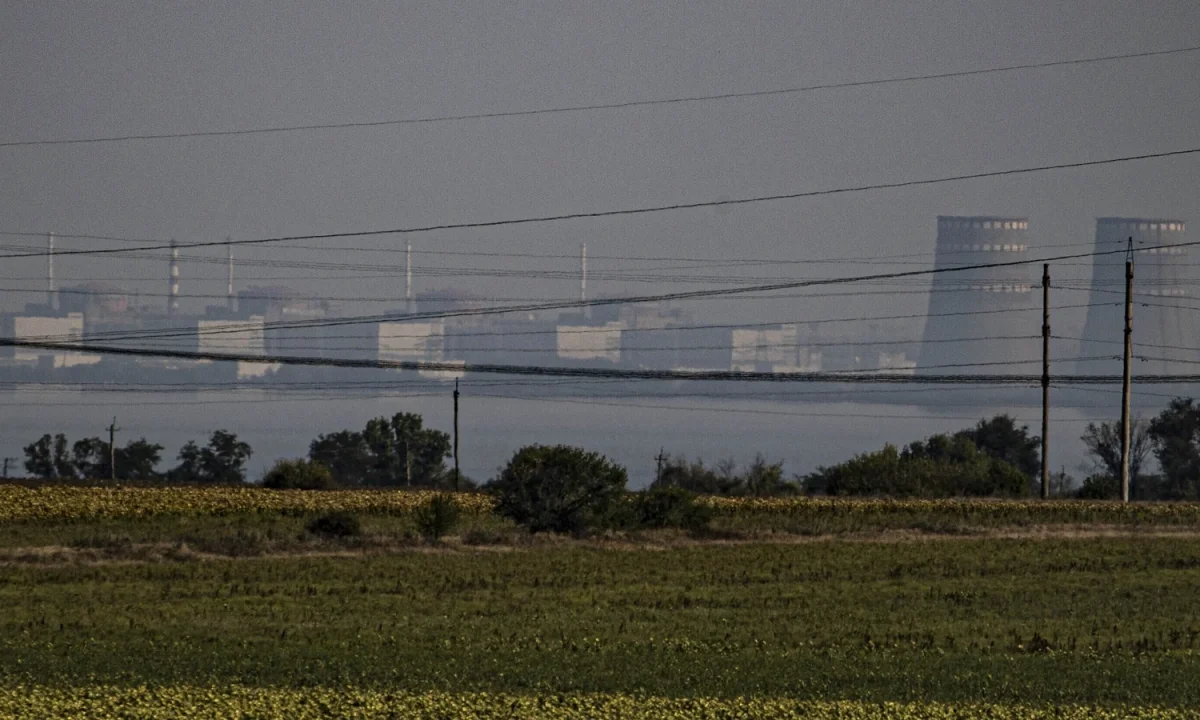
The government said £210 million (€243 million) in export finance would enable UK-based Urenco to supply enriched uranium to Energoatom, Ukraine’s nuclear power producer.
Cost of restoration of Kyiv cathedral to be finalised
Repairing Kyiv’s Dormition Cathedral and the surrounding monastery complex could take about two years after damage caused by a Russian attack yesterday, the site’s director said.
A Russian barrage of missiles and drones yesterday killed at least 11 people across Ukraine and sparked a fire at the Pechersk Lavra in Kyiv, among the most important Orthodox monasteries.
“According to our expert estimates, assuming everything goes smoothly, the restoration and renovation work could take around two years,” Maksym Ostapenko, director of the Kyiv-Pechersk Lavra complex, told reporters during a press conference at the site.
He said preliminary estimates put the damage to the monastery at around 500 million hryvnias (€9.6 million), with a final figure expected in the coming days.
Firefighters on a lifting platform extinguish a fire at Dormition Cathedral
Standing before the Dormition Cathedral, with charred debris and fragments of a golden cross nearby, Mr Ostapenko addressed reporters at the damaged site.
The cathedral, which caught fire in the overnight attacks, was almost entirely destroyed during World War II and rebuilt only in the 1990s.
Above the structure, as ash drifted through the air, workers had already begun installing a new roof to shield the building and its collection of icons.
The Kyiv-Pechersk Lavra, an 11th-century monastery crowned by its iconic golden domes, is revered by both the Russian and Ukrainian branches of the Orthodox Church as one of their most important spiritual centres.
Ukraine said Russian drones struck the site, a claim Moscow rejected, saying it had been hit by a misfiring US-made Patriot air-defence missile.
Culture Minister Tetiana Berezhna said the Russian strikes amounted to “one of the largest attacks on Ukrainian culture and Ukrainian cultural heritage” of the four-year invasion, with 13 monuments and sites hit across the country.
Mr Ostapenko said his team was working to reopen the monastery to visitors as quickly as possible.
“Now we are looking into the possibility of resuming visits to the Kyiv-Pechersk Lavra sites… because it must continue to live,” he said.
Moscow oil refinery damaged in Ukrainian drone attack, mayor says
Gazpromneft’s Moscow oil refinery processed 11.6 million tons of oil in 2024
A Ukrainian drone attack damaged a facility at the Moscow oil refinery owned by Russia’s Gazpromneft SIBN.MM, Moscow Mayor Sergei Sobyanin said.
“There were no casualties. Emergency services are working at the scene,” Mr Sobyanin wrote on Telegram. He did not say whether the refinery’s operations have been affected.
The refinery, the largest in the Moscow region, processed 11.6 million tons of oil in 2024, the latest available data show, producing 2.9 million tons of petrol and 3.2 million tons of diesel.
The number of drone strikes on Russian refineries has doubled since the start of 2026, contributing to full or partial shutdowns in oil processing and a drop in gasoline, diesel and jet fuel output, according to official data, social media and Reuters calculations.
The Gazpromneft refinery serves the Moscow region, which until now has not been among the dozen or so Russian regions affected by supply disruptions.