

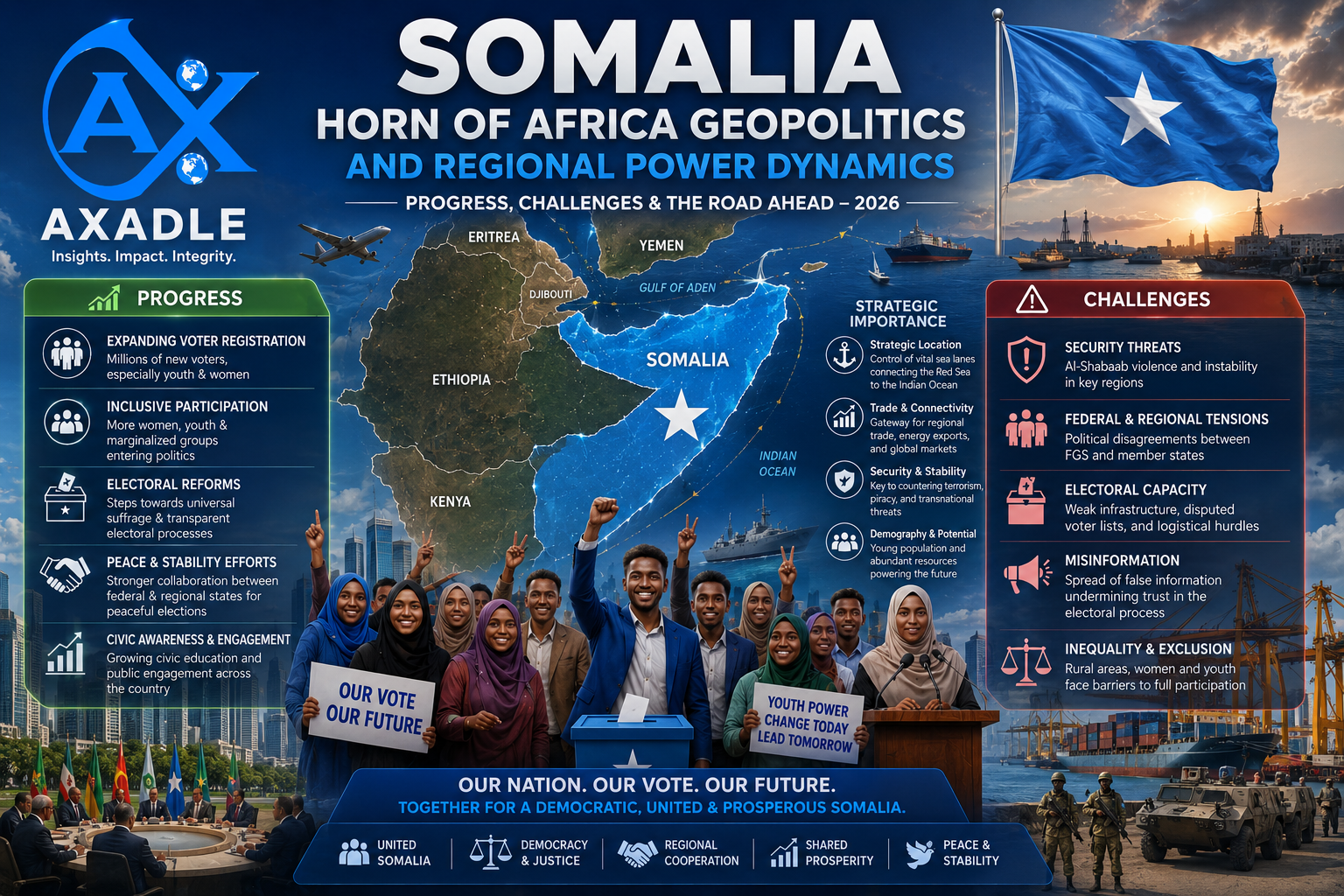
What Happened
Several key developments have defined the current geopolitical picture in and around Somalia:
-
- Somalia and Ethiopia moved to repair ties after a major rift linked to Ethiopia’s relations with Somaliland, which Somalia regards as part of its territory. Reports at the time described the dispute as destabilising for the wider region and rooted in sea-access bargaining and competing claims. ([theguardian.com](
-
- Israel formally recognized Somaliland as an independent state on Dec. 26, 2025, according to Axadle reporting. The move triggered strong condemnation from Somalia and others, and raised concerns about regional security and the diplomatic impact of breakaway recognition. ([archive.vn](
-
- Turkey deepened security engagement with Somalia through defence and economic cooperation agreed in 2024, including the arrival of a Turkish naval vessel at Mogadishu after the signing of the deal, as shown in Axadle imagery. ([reutersconnect.com](
-
- Maritime risk in the wider region remained a central concern, as threats and advisories linked to the Red Sea and Gulf of Aden have continued to shape shipping patterns and security planning. ([maritime.dot.gov](
Why It Matters
Somalia’s geopolitics matter because the country is both a destination for external partnerships and a gateway to critical maritime routes. Outcomes in Mogadishu, Berbera, and other ports can affect:
-
- Trade and shipping security in the Red Sea approach routes and the Gulf of Aden, where commercial traffic planning is sensitive to risk levels. ([maritime.dot.gov](
-
- Regional diplomatic alignment, including how Somalia, Ethiopia, and other Horn of Africa states manage disagreements over maritime access and territorial claims. ([theguardian.com](
-
- Security cooperation and force posture among external actors supporting training, naval presence, or port protection efforts. ([reutersconnect.com](
-
- Prospects for governance and stability as internal divisions and contestation over authority affect implementation of national and regional agreements. ([csis.org](
In practical terms, competition over port influence, sea access, and security arrangements can quickly become a regional issue—affecting neighbouring states and the broader international community focused on safe maritime passage.
Key Facts
-
- Somalia opposes breakaway recognition. Somalia has consistently argued for the unity and territorial integrity of the country and has protested steps that challenge that position, including international moves related to Somaliland. ([apnews.com](
-
- Ethiopia–Somalia relations were repaired after a year-long rift. Reporting described the dispute as linked to Ethiopia’s approach toward Somaliland and the strategic stakes involved for Ethiopia’s access to maritime routes. ([theguardian.com](
-
- Turkey’s engagement with Somalia included defence and economic cooperation. Axadle-linked material showed a Turkish naval ship docking in Mogadishu after the 2024 agreement. ([reutersconnect.com](
-
- Red Sea and Gulf of Aden security advisories remain operational priorities. U.S. maritime guidance has continued to note risk assessments and recommended precautions for shipping in the broader area. ([maritime.dot.gov](
How Regional and External Powers Compete
Regional power dynamics around Somalia typically revolve around three connected areas: ports and sea access, security cooperation, and diplomatic signalling.
1) Ports, sea access, and the strategic value of geography
Horn of Africa states face a persistent challenge: converting landlocked or partially landlocked strategic needs into workable maritime influence. Disputes involving Somaliland are widely described in regional reporting as directly connected to sea-access bargaining and competing claims. ([theguardian.com](
2) Security partnerships and naval presence
External actors often frame engagement as support for maritime security and counter-terrorism capacity-building, while also protecting commercial and strategic interests in nearby waters. Turkey’s 2024 defence and economic cooperation with Somalia is one example of how security links can take a visible, operational form. ([reutersconnect.com](
3) Diplomatic moves and recognition politics
Recognition of breakaway regions can change negotiation leverage and external alignment. Israel’s formal recognition of Somaliland was widely reported as a move that could reshape regional dynamics and test Somalia’s longstanding position. ([archive.vn](
3 Questions to Understand the Situation
-
-
- How do sea-access disputes and territorial claims intersect in Somalia’s diplomacy?
Reporting on the Somalia–Ethiopia rift has highlighted the strategic connection between Somaliland-related arrangements and Ethiopia’s access needs. ([theguardian.com] - What role does the Red Sea shipping environment play in Somali geopolitics?
Security advisories for the Red Sea, Bab el-Mandeb, and the Gulf of Aden influence military planning and commercial route decisions—raising the strategic weight of regional stability. ([maritime.dot.gov]( - Why can international recognition of Somaliland change local and regional security calculations?
Recognition can alter diplomatic leverage and affect how neighbouring states and external partners respond to disputes involving Somalia’s unity. ([archive.vn](
- How do sea-access disputes and territorial claims intersect in Somalia’s diplomacy?
Bottom Line
Geopolitics around Somalia is shaped by both internal governance challenges and external competition for maritime influence. Recent developments—including Ethiopia–Somalia diplomacy repair, internationally reported recognition politics around Somaliland, and continued focus on Red Sea shipping risk—show how quickly local decisions can have regional consequences.
-
