

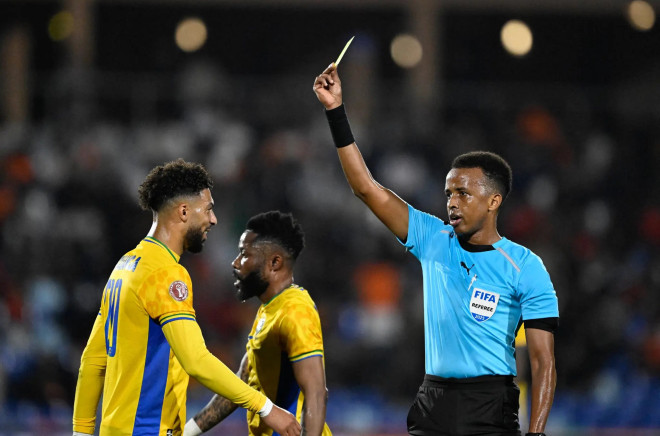
By: Jafar Yussuf Sunday June 14, 2026
The World Cup sells itself on a grand, almost sacred idea: a single arena where talent, not nationality, decides who belongs. But as the 2026 tournament gets underway, that principle has already been tested in ugly fashion. Omar Abdulkadir Artan, the reigning CAF African Referee of the Year and a source of national pride for Somalia, made the long journey from Nairobi via Istanbul to Miami.
- Advertisement -
He arrived with an official FIFA appointment, a valid visa and a diplomatic passport. None of it mattered. U.S. immigration authorities stopped him at Miami International Airport and sent him back, a blunt rebuke rooted not in any allegation of wrongdoing, but in geopolitics: his passport is Somali, and Somalia falls under tough U.S. travel restrictions.
This is not merely an isolated bureaucratic mistake. It reflects a deeper and increasingly untenable contradiction, in which Western powers reap the prestige and commercial rewards of staging global spectacles while keeping in place sweeping border regimes that effectively treat African countries as unwelcome outsiders.
For Somali and African athletes, journalists and other professionals, crossing borders for international work has become a costly and demeaning lottery. The U.S. has steadily reduced visa processing centers across Africa, leaving applicants to spend thousands of dollars in non-refundable fees simply to seek an interview, only to confront an 85% rejection rate. Executive orders drafted in sweeping terms can wipe away years of achievement in an instant, recasting elite international figures as broad security concerns.
When a country hosts a global tournament, it accepts a moral obligation to provide a neutral stage for the world. By using immigration rules to sideline a FIFA official from a selected nation, the United States has violated that principle.
The double standard must end: Western nations cannot keep collecting the cultural and sporting benefits of global events while shutting the gate on the very people who make those events possible. Going forward, bodies such as FIFA should impose a hard condition on any nation seeking to host an international tournament: if you cannot open your doors to the world, you should not host the world.
If the United States believes its security requires blanket bans, heavy financial barriers and the removal of African delegates at the border, it has every sovereign right to enforce those measures. But it cannot at the same time insist on the privilege of hosting the world’s game. A nation cannot welcome the globe into its backyard while leaving an invisible wall at the entrance. If the doors are closed to the world’s best talent, then that nation should be ruled out as a host for global competitions. Host countries now face a clear choice: adapt to the global community, or step aside.
