
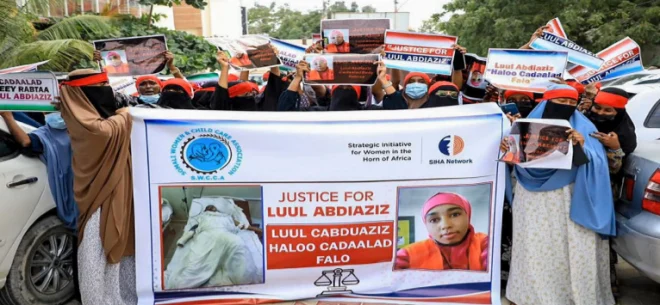
Somalia is often framed through conflict and crisis. But the country’s most consequential emergency lies in the quiet, daily erosion of women’s safety, dignity and power. Gender-based violence is not a subplot to Somalia’s turmoil; it is a central driver of its fragility—and the clearest test of whether recovery is real or rhetorical.
Strip away the headlines and a pattern emerges. Historically, wealth flowed through livestock held by men; women’s labor—processing and selling milk and ghee—sustained families but rarely translated into decision-making power. The state’s collapse, insurgency and displacement entrenched that order. Institutions meant to protect civilians deteriorated, while customary structures, already unequal, hardened into gatekeepers. The result is a system where women shoulder Somalia’s survival yet remain excluded from its choices.
- Advertisement -
That exclusion is not abstract. It governs who gets heard, who gets justice and who is deemed credible in public life. Reliable data on abuse and mortality are scarce—a consequence of broken institutions and the private nature of violence—but the lived reality is plain: high maternal mortality, widespread female genital mutilation, rape and domestic abuse that too often meet silence rather than accountability. In cases of sexual violence, domestic assault or child marriage, customary law is frequently applied instead of state or Islamic courts, reinforcing impunity rather than redress.
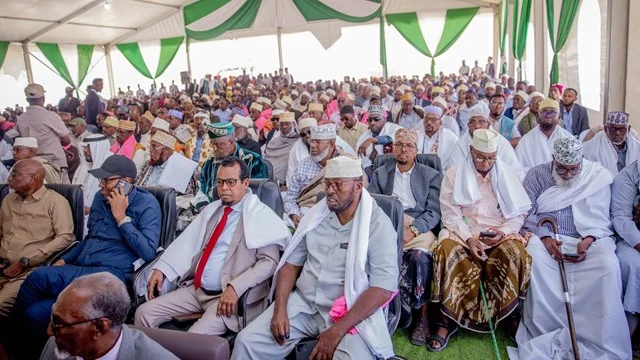
Even moments that promise renewal can reproduce exclusion. During the 2025 national election consultations, Somali women—long credited for sustaining communities through war and displacement—were largely absent from the negotiating table. In a political system organized around clan affiliation, women are routinely treated as dependents rather than stakeholders. Their contributions are praised in speeches, then omitted from the room where rules are drafted.
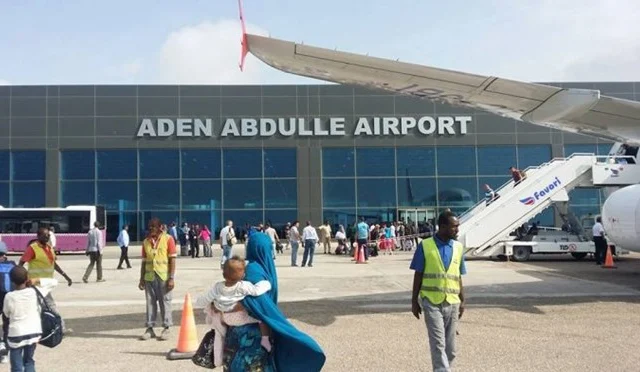
The stakes of this failure are measured in lives. In early 2024, the killing of Luul Sheikh Abdiaziz, a pregnant mother of six who reportedly was burned to death by her husband, exposed the brutal intimacy of Somalia’s crisis. She worked at Aden Abdulle International Airport and was expecting her seventh child. The act was an assault on life itself—on motherhood, continuity and hope—and it left a family suddenly orphaned and in need of support.
What followed was just as telling. Outrage flickered, then faded. There was no sustained institutional response commensurate with the crime, no durable public reckoning with the conditions that allowed it. This is the pattern: violence against women is individualized, then obscured by the language of “complex emergencies,” as though complexity could excuse barbarity. Silence becomes its own form of violence.
Yet Somali women are not passive subjects of this story. They are traders who keep households afloat, activists documenting abuses when documentation is dangerous, midwives saving lives with few resources and peacebuilders willing to cross clan lines when others will not. In displacement camps and city neighborhoods alike, women create networks of care where the state has failed. They are not waiting to be rescued; they are already leading.
Economics compounds the injustice. Women are the backbone of Somalia’s informal economy yet lack secure access to land, credit and formal employment. Contracts are mediated through clan elders; property rights remain contested; and financial services are often out of reach. Climate shocks tighten the vise. Droughts and floods destroy livelihoods, push up food prices and force impossible trade-offs: walking farther for water, pulling children—especially girls—out of school, absorbing hunger first so others can eat. Resilience is demanded of women but rarely rewarded or resourced.
This is not a “women’s issue.” It is a national test of the state’s purpose and the social contract’s credibility. A country cannot heal while half its population lives in fear. Nor can peace endure when justice is selectively applied or delegated to systems that deny survivors a meaningful remedy. Security sector reforms that ignore domestic and sexual violence, or economic strategies that treat women as adjunct labor rather than agents of growth, will fail on their own terms.
The answers are not mysterious. Somalia needs enforceable laws against gender-based violence and the capacity to apply them. It needs credible representation for women in political negotiations, not symbolic seats after deals are done. It needs investments in girls’ education that survive budget cycles and security crises, and economic reforms that give women access to land titles, collateral-free credit and fair markets. Above all, it needs to listen—to center Somali women’s priorities in policies that claim to serve them.
A way forward could include the following steps:
- Adopt and enforce comprehensive legislation against gender-based violence, with survivor-centered procedures that protect confidentiality and due process.
- Establish specialized investigative units and courts with trained prosecutors and judges to handle sexual and domestic violence cases, limiting the use of customary settlements in such crimes.
- Guarantee women’s meaningful participation in political negotiations through binding quotas and transparent selection processes enforced at the clan and party level.
- Expand access to education for girls—especially in rural and displacement settings—by funding safe schools, scholarships and pathways from secondary to technical training.
- Enable women’s economic agency through land titling reform, micro and small-business finance tailored to informal traders and legal aid for property disputes.
- Integrate protection from gender-based violence into humanitarian and climate-resilience programs, including shelters, psychosocial services and cash assistance tied to community-based protection networks.
- Invest in data systems that track violence, case outcomes and service delivery, so policy can be driven by evidence rather than anecdote.
These are not Western imports or donor checklists; they are practical steps demanded by Somali women and compatible with a rights-respecting interpretation of Islamic and national law. The core principle is simple: shift the burden from survivors to institutions. It should not fall to a mother fleeing abuse to navigate a maze of elders, police stations and clinics only to be told her case threatens “social harmony.” Harmony cannot be built on coercion.
The cultural and religious legitimacy of reform matters. Imams, elders and women leaders already serve as moral anchors in their communities; they can be powerful allies in delegitimizing violence and championing just remedies. But legitimacy cannot be an alibi for inaction. When customary forums launder impunity, the state must draw lines—in law, in courtrooms and in budgets.
Somalia’s recovery depends on the credibility of its justice. That credibility will be measured not only by counterterrorism operations or revenue targets but by whether a woman in Mogadishu, Baidoa or Garowe can seek protection and receive it; whether a girl can walk to school and return home; whether a mother can give birth without facing preventable risk; whether men who commit violence face consequences, not quiet absolution.
The memory of Luul Sheikh Abdiaziz must not fade into the haze of crisis fatigue. Her death should be a reckoning—and a catalyst. Protecting women is not ancillary to nation-building; it is the foundation of it. Somalia will know it is recovering when justice for women is ordinary, not exceptional, and when power reflects the work women have long done in the open, often alone.
By Ali Musa
Axadle Times international–Monitoring.